Table of Contents
Electricity powers almost every part of modern life, from lighting and appliances to heating and entertainment systems. While many homeowners enjoy tackling DIY projects around the house, electrical work is one area where taking shortcuts can have serious consequences. A simple mistake can lead to electric shock, fire, expensive repairs, or permanent damage to your home’s electrical system.
Some basic tasks, such as changing a light bulb or resetting a tripped breaker when it is safe to do so, may be straightforward. However, many electrical problems require the knowledge, experience, and specialised equipment of a licensed electrician. Knowing when to call a professional can help protect your home, your family, and your investment.
Here are five electrical problems you should never try to fix yourself.
1. Frequent Circuit Breaker Trips
Circuit breakers are designed to protect your home by shutting off power when they detect an overloaded circuit or an electrical fault. While an occasional trip can happen, a breaker that trips repeatedly is a warning sign that something needs attention.
Many homeowners simply reset the breaker and hope the problem goes away. Unfortunately, repeatedly resetting a breaker without identifying the underlying cause can allow a potentially serious electrical problem to continue. Regular or unexplained tripping can be associated with overloaded circuits, faulty appliances, or wiring problems.
Possible causes include:
- Overloaded electrical circuits
- Faulty wiring
- Defective appliances
- Damaged circuit breakers
- Hidden electrical faults behind walls
A qualified electrician can safely inspect your electrical system, identify the root cause, and recommend the appropriate repair. Ignoring repeated breaker trips could increase the risk of electrical damage or fire.
You may also like to read about- “How to Choose the Right Electrician for Your Home Projects”
2. Flickering or Dimming Lights
If a single light flickers occasionally, the problem may be as simple as a loose bulb. However, when multiple lights flicker or dim throughout your home, it can point to a more serious electrical issue.
Common causes can include loose wiring connections, overloaded circuits, problems with the electrical panel, or issues with the power supply.
Loose electrical connections are particularly concerning because they can generate heat and potentially become a fire hazard over time.
Rather than guessing at the cause, contact an experienced electrician who can safely inspect the electrical system and determine whether repairs or upgrades are necessary. Professional testing can help identify the problem before it becomes more expensive or dangerous.
3. Burning Smells or Sparking Outlets
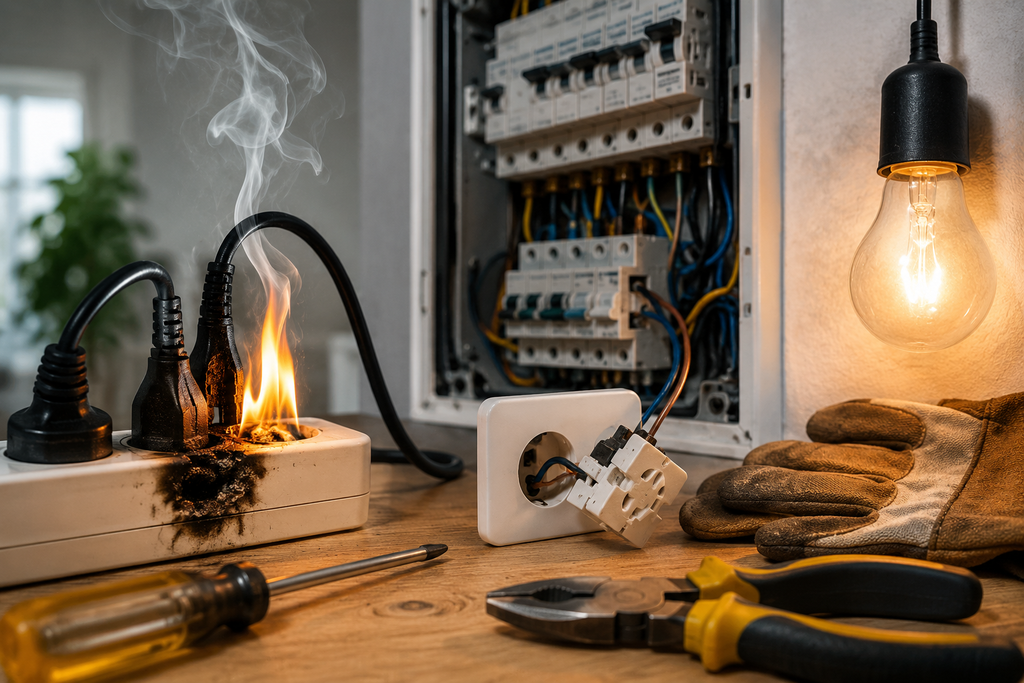
One of the clearest warning signs of an electrical problem is the smell of burning plastic or smoke coming from an outlet, switch, or electrical panel. You should also take sparking outlets seriously, especially if sparks are frequent, large, or accompanied by buzzing sounds.
These warning signs may indicate:
- Overheated wiring
- Loose electrical connections
- Damaged outlets
- Overloaded circuits
- Electrical arcing
If you notice any of these symptoms, keep away from the affected area and avoid using the outlet. If it is safe to do so, switch off the affected circuit and arrange for a licensed electrician to inspect it.
Never attempt to disassemble or repair a sparking outlet yourself. An electrician has the appropriate tools and training to safely diagnose the issue and replace damaged components before they cause further damage.
4. Electrical Panel Repairs or Upgrades
Your electrical panel is the heart of your home’s electrical system. It distributes electricity throughout the house and helps protect circuits from dangerous overloads.
Working inside an electrical panel can expose you to dangerous electrical components, even when individual breakers have been switched off. This makes panel work one of the most hazardous DIY projects a homeowner can attempt. Electrical safety authorities recommend using a licensed electrician for electrical work rather than attempting repairs yourself.
You should never try to:
- Replace the electrical panel
- Install new breakers
- Add additional circuits
- Upgrade panel capacity
- Modify electrical wiring inside the panel
These projects may require permits, inspections, and compliance with local electrical regulations. A licensed electrician can complete the work safely while ensuring your system meets the required safety standards.
If your home has an older electrical panel or struggles to support modern appliances, a professional assessment can help determine whether an upgrade is appropriate.
5. Hidden or Damaged Wiring
Electrical wiring hidden behind walls, ceilings, and floors should never be repaired without proper training. Damaged wiring can result from ageing, rodents, water leaks, home renovations, or accidentally drilling into walls.
Signs of damaged wiring can include:
- Warm walls or outlets
- Buzzing sounds
- Burning odours
- Frequent breaker trips
- Intermittent power loss
Finding the damaged section often requires specialised testing equipment and a thorough understanding of electrical systems.
Attempting to replace or splice hidden wiring without understanding the circuit can create serious hazards that may remain hidden for years. Concealed cables can also be damaged during renovation work, potentially creating a risk of electric shock or fire.
An experienced electrician can locate damaged wiring, replace it safely, and verify that the entire circuit is functioning properly.
You may also like to read about- “The Safest Method to Clean Light Switches and Electrical Coverings”
Why Hiring a Professional Is Worth It
Although hiring a licensed electrician may seem more expensive than attempting a DIY repair, professional service can save money over time. Proper repairs reduce the likelihood of recurring problems, help prevent costly property damage, and ensure your home’s electrical system complies with applicable safety requirements.
Professional electricians also have the appropriate tools, safety equipment, and experience to complete repairs efficiently while minimising risk.
Most importantly, they understand how different parts of your electrical system work together, allowing them to identify hidden problems that homeowners might overlook.
Don’t Forget the Clean-Up After Electrical Work
Electrical repairs, rewiring, panel upgrades, and renovation work can sometimes leave behind dust, debris, packaging, and other mess around the property. Once the electrical work has been completed and the area has been confirmed safe, thorough cleaning can help restore the space and make it comfortable to use again.
For larger renovation or electrical projects, professional post-construction or specialised cleaning can be particularly useful for removing accumulated dust and debris from floors, surfaces, fixtures, and other affected areas. Keeping the area clean after the work is finished also helps give the property a fresh, finished appearance.
Final Thoughts
Electrical problems should never be ignored, especially when they involve repeated breaker trips, flickering lights, burning smells, electrical panels, or damaged wiring. While DIY projects can be rewarding, electrical repairs require specialised knowledge and should be left to trained professionals.
If you notice any of these warning signs, contact a licensed electrician as soon as possible. Prompt attention can help prevent accidents, protect your home, and provide peace of mind that your electrical system is operating safely for years to come.
Once the electrical work is complete, taking care of any resulting dust, debris, and mess can also help return your home to a clean and comfortable condition.
Turn your space into a haven of cleanliness! Book your cleaning today and feel the difference instantly.