Table of Contents
Managing a residential building involves much more than handling leases, maintenance requests, and tenant communication. Cleanliness plays a major role in how residents experience the property and how visitors, prospective tenants, and owners perceive its overall condition.
A well-maintained building can improve tenant satisfaction, support property value, reduce long-term maintenance issues, and create a safer, healthier environment. On the other hand, neglected common areas, dirty entryways, overflowing bins, and poorly maintained facilities can quickly lead to complaints.
That is why every property manager needs a practical residential building cleaning checklist.
Whether you manage an apartment complex in Sydney, a residential development in Melbourne, a strata property in Perth, or a multi-unit building in Brisbane, having a structured cleaning plan makes it easier to maintain consistent standards.
This guide covers the key areas property managers should include in their residential property cleaning checklist, along with practical scheduling tips and a comparison table to help you choose the right cleaning approach.
Why a Residential Building Cleaning Checklist Matters
Without a clear cleaning checklist, important tasks can easily be missed. Different areas of a residential building require different levels of attention, and understanding rental property maintenance responsibilities helps tenants know which tasks need to be addressed before moving out.
A structured checklist helps property managers:
- Maintain consistent cleaning standards
- Improve the appearance of common areas
- Reduce tenant complaints
- Identify maintenance issues earlier
- Improve hygiene and safety
- Extend the life of floors, fixtures, and shared facilities
- Track completed cleaning tasks
- Make communication with cleaning teams easier
For larger apartment buildings and strata properties, a checklist also creates accountability. Property managers can clearly define what needs to be completed, how often it should be done, and which areas require additional attention.
The goal is not simply to make the building look clean. Effective residential building cleaning services help create an environment that residents are comfortable coming home to every day.
Entrance, Lobby and Reception Area Cleaning
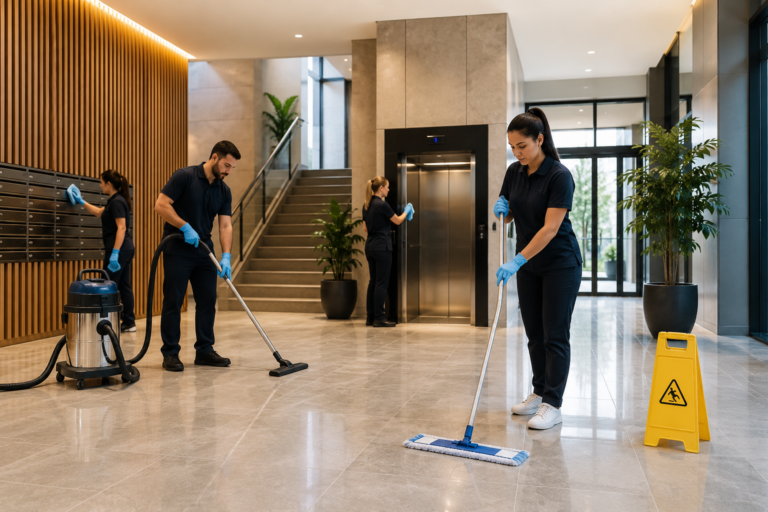
The entrance is often the first part of the property that residents, visitors, and potential tenants see. A poorly maintained lobby can create a negative impression before someone even enters the building.
Daily or Regular Cleaning Tasks
The cleaning team should focus on:
- Sweeping and mopping hard floors
- Vacuuming entrance mats and carpets
- Removing visible dirt and debris
- Cleaning glass entry doors
- Wiping door handles and touchpoints
- Dusting reception counters and furniture
- Cleaning mirrors
- Emptying rubbish bins
- Removing fingerprints from glass surfaces
- Checking for cobwebs and dust buildup
You may also like to read about- “Strata Cleaning vs. Commercial Cleaning: Which Does Your Property Need?”
Periodic Deep Cleaning
Some tasks may only need weekly or monthly attention, depending on building traffic.
These may include:
- Deep carpet cleaning
- Detailed cleaning of skirting boards
- High dusting
- Wall spot cleaning
- Polishing suitable surfaces
- Cleaning vents and light fittings
Property managers should also inspect the entrance regularly for damage, water leaks, broken tiles, or other issues that may require maintenance rather than cleaning.

Hallways, Corridors and Stairwell Cleaning
Hallways and stairwells receive constant foot traffic. Dust, dirt, leaves, and other debris can quickly accumulate, particularly in busy apartment buildings.
A professional apartment building cleaning checklist should include both routine cleaning and scheduled detailed cleaning.
Routine Tasks
- Vacuum carpets and runners
- Sweep and mop hard flooring
- Remove rubbish and litter
- Wipe handrails
- Remove cobwebs
- Spot-clean walls and doors
- Clean visible marks from switches and touchpoints
- Check corners and edges for dust buildup
Stairwell Maintenance
Stairwells can sometimes receive less attention than other common areas. However, they can collect significant amounts of dust and debris.
Cleaning should include:
- Sweeping every level
- Mopping hard surfaces
- Wiping handrails
- Removing cobwebs
- Cleaning stairwell windows where accessible
- Checking emergency signage for visibility
Regular cleaning also makes it easier to identify safety hazards such as damaged flooring or loose handrails.
Lift, Elevator and Shared Access Area Cleaning
Lifts are high-touch areas and should be included in every residential cleaning maintenance plan.
Because residents use buttons, rails, doors, and control panels frequently, these spaces can quickly show fingerprints and dirt.
Essential Lift Cleaning Tasks
- Wipe internal walls and surfaces
- Clean lift buttons carefully
- Polish appropriate metal surfaces
- Clean mirrors
- Vacuum or mop flooring
- Remove marks from lift doors
- Clean handrails
- Check corners for dust and debris
The frequency of lift cleaning should depend on the number of residents and daily building traffic.
Busy residential buildings may require daily attention, while smaller properties may only need professional cleaning several times per week.
Shared Facilities and Common Area Cleaning
Modern residential buildings often include shared facilities such as gyms, lounges, meeting rooms, rooftop areas, swimming pool surrounds, or communal kitchens.
These areas require a tailored cleaning schedule because different surfaces and facilities have different hygiene requirements.
Shared Lounge and Community Spaces
A cleaning checklist may include:
- Vacuuming carpets and rugs
- Mopping hard floors
- Dusting tables and furniture
- Cleaning glass surfaces
- Wiping frequently touched areas
- Emptying rubbish bins
- Spot-cleaning walls
- Arranging furniture neatly
Communal Kitchens
Kitchen areas require additional attention because food preparation can create hygiene concerns.
Tasks should include:
- Cleaning benchtops
- Wiping cupboards externally
- Cleaning sinks
- Removing food debris
- Cleaning tables and chairs
- Emptying rubbish bins
- Cleaning appliance exteriors
- Mopping floors
Property managers should establish clear rules for residents regarding shared kitchen use. Cleaning teams can maintain the space, but resident cooperation is also important.
Gym and Fitness Areas
Gym cleaning should focus on both appearance and hygiene.
Important tasks include:
- Wiping equipment
- Cleaning mirrors
- Vacuuming or mopping floors
- Cleaning mats
- Emptying bins
- Wiping benches and shared surfaces
- Cleaning drinking stations where applicable
High-use facilities may require more frequent cleaning than standard common areas.
Bin Room and Waste Management Area Cleaning
Waste areas can quickly become a source of unpleasant odours, pests, and tenant complaints if they are not maintained properly.
A good property management cleaning checklist should include regular bin room inspections.
Bin Area Checklist
- Remove loose rubbish
- Sweep floors
- Mop washable surfaces
- Clean spills
- Wipe bin lids and touchpoints
- Remove visible stains
- Check for unpleasant odours
- Report overflowing or damaged bins
- Look for signs of pests
- Ensure waste is placed in appropriate areas
Bin rooms may also need periodic pressure washing or deep cleaning, depending on the property layout and waste volume.
Keeping these areas clean is particularly important during warmer periods, when odours and pest activity can increase.
External Areas, Car Parks and Building Surroundings
The appearance of a residential property does not stop at the front door. Outdoor areas also influence how residents and visitors perceive the building.
Property managers should include outdoor spaces in their residential strata cleaning checklist.
External Cleaning Tasks
- Sweep pathways and entry areas
- Remove leaves and loose debris
- Remove cobwebs from accessible areas
- Clean outdoor furniture
- Empty external rubbish bins
- Check for spills or stains
- Clean accessible signage
- Keep shared outdoor areas tidy
Car Parks and Garages
Car parks may need:
- Sweeping
- Removal of loose rubbish
- Cobweb removal
- Spot cleaning
- Pressure washing when required
- Cleaning accessible common surfaces
A regular inspection is useful because cleaning teams may notice issues such as oil leaks, damaged lighting, or illegal dumping.
In this way, professional cleaning can also support proactive property maintenance.
You may also like to read about- “Choosing the Right Strata Cleaning Company in Sydney”
Bathrooms and Other High-Hygiene Areas
Where residential buildings have shared bathrooms or toilet facilities, hygiene should be a top priority.
These areas should be cleaned using a structured process that addresses both visible dirt and frequently touched surfaces.
Shared Bathroom Checklist
- Clean and disinfect toilets
- Clean sinks and taps
- Wipe mirrors
- Clean partitions and doors
- Refill soap and paper supplies where required
- Empty sanitary and rubbish bins
- Mop floors
- Check for unpleasant odours
- Report plumbing leaks or damaged fixtures
Property managers should consider the level of usage when deciding cleaning frequency. A facility used by many residents may require daily or multiple daily inspections, particularly when moving out of a rental home and preparing the property for its final inspection.

Daily, Weekly and Periodic Cleaning Schedule
One of the biggest challenges for property managers is deciding how often each task should be completed.
The best schedule depends on:
- Building size
- Number of residents
- Foot traffic
- Available facilities
- Seasonal conditions
- Budget
- Property expectations
Here is a simple comparison to help structure a cleaning program.
| Cleaning Area | Frequent or Daily Tasks | Weekly Tasks | Periodic Deep Cleaning |
| Entrance and lobby | Sweep, mop, wipe touchpoints, empty bins | Detailed dusting and glass cleaning | Carpet and detailed surface cleaning |
| Hallways | Vacuum or sweep, remove litter | Wall and door spot cleaning | High dusting and carpet treatment |
| Lifts | Clean buttons, mirrors, floors | Detailed surface cleaning | Deep cleaning of difficult areas |
| Stairwells | Sweep and remove debris | Mop and wipe rails | Detailed corner and high-area cleaning |
| Shared facilities | Clean high-use surfaces and bins | Detailed furniture and floor cleaning | Deep cleaning based on facility use |
| Bin rooms | Remove loose rubbish and clean spills | Floor and surface cleaning | Pressure washing or intensive cleaning |
| Car parks | Remove rubbish and debris | General sweeping | Pressure washing and detailed cleaning |
| Outdoor areas | Sweep pathways and remove litter | Clean furniture and shared spaces | Seasonal deep cleaning |
This approach allows property managers to balance cleanliness with operational efficiency.
Professional Cleaning vs In-House Cleaning for Residential Buildings
Some property managers rely on building staff or caretakers for general cleaning. Others choose a professional residential cleaning company.
Both options can work, but the right choice depends on the building’s requirements.
| Factor | In-House Cleaning | Professional Cleaning Service |
| Staff availability | Depends on existing employees | Scheduled according to agreed service plan |
| Equipment | May require separate purchases | Professional equipment can be supplied |
| Cleaning consistency | Can vary between staff members | Checklist-based processes improve consistency |
| Scalability | May be difficult during busy periods | Easier to adjust cleaning frequency |
| Specialist cleaning | May require external contractors | Can often be arranged as part of the service |
| Management oversight | Requires internal supervision | Clear scopes and reporting can simplify management |
For busy residential properties, outsourcing can reduce the administrative burden of managing cleaning staff and equipment.
Dirt2Tidy works with property managers and residential properties to create practical cleaning solutions based on building size, common areas, and required service frequency.
You may also like to read about- “How Much Does Strata Cleaning Cost in Australia?”
How Property Managers Can Improve Cleaning Standards
A checklist is only effective when it is regularly reviewed and followed.
Property managers can improve results by using a few simple strategies.
Conduct Regular Inspections
Walk through common areas regularly rather than waiting for resident complaints.
Look for:
- Dust buildup
- Dirty glass
- Overflowing bins
- Marks on walls
- Cobwebs
- Unpleasant smells
- Floor damage
- Poorly maintained shared facilities
Create Clear Cleaning Scopes
Avoid vague instructions such as “clean common areas.”
Instead, specify exactly what should be cleaned and how often.
For example:
- Vacuum corridors three times per week
- Clean lift mirrors daily
- Sweep car parks weekly
- Deep-clean bin rooms monthly
Clear expectations reduce confusion.
Adjust Cleaning Frequency When Needed
Cleaning schedules should not remain fixed forever.
During rainy weather, entrance areas may require more frequent attention. During busy periods or building events, shared facilities may need additional cleaning.
Flexibility helps maintain standards throughout the year.
Encourage Resident Cooperation
Cleaning teams cannot control how every resident uses a shared space.
Clear building guidelines can help residents:
- Dispose of rubbish correctly
- Clean up after using shared facilities
- Report spills
- Avoid leaving personal belongings in common areas
When residents and cleaning teams both contribute, the building is easier to maintain.
Choosing the Right Residential Building Cleaning Service
When selecting a cleaning provider, property managers should look beyond the lowest price.
A reliable provider should understand the needs of apartment buildings, strata properties, and shared residential spaces.
Consider asking:
- Does the company have experience with residential buildings?
- Can the cleaning schedule be customised?
- Is there a clear cleaning checklist?
- Can additional services be arranged when needed?
- Are communication and reporting processes clear?
- Can the service scale during busy periods?
Dirt2Tidy can support residential property managers with tailored cleaning services designed around the specific needs of common areas, shared facilities, and building environments.
The right cleaning partnership can make property management easier while helping maintain a cleaner and more welcoming environment for residents.
Frequently Asked Questions About Residential Building Cleaning
What should be included in a residential building cleaning checklist?
A residential building cleaning checklist should cover entrances, lobbies, hallways, lifts, stairwells, shared facilities, bin rooms, bathrooms, car parks, and external common areas. The checklist should also specify how often each task needs to be completed.
How often should common areas in an apartment building be cleaned?
Cleaning frequency depends on foot traffic and building size. High-traffic areas such as entrances and lifts may require daily cleaning, while lower-use areas may only need weekly attention.
Why is professional cleaning important for property managers?
Professional cleaning can help maintain consistent standards, improve resident satisfaction, reduce complaints, and support a more organised property maintenance program.
Should bin rooms be included in regular residential cleaning?
Yes. Bin rooms should be inspected and cleaned regularly to control odours, reduce pest risks, and keep waste areas presentable.
What is the difference between strata cleaning and residential building cleaning?
Strata cleaning generally focuses on common property managed under a strata or owners corporation arrangement. Residential building cleaning is a broader term that can include apartment complexes, rental buildings, and other multi-residential properties.
How can property managers track cleaning quality?
Property managers can use cleaning checklists, inspection schedules, service reports, resident feedback, and regular walkthroughs to monitor cleaning performance.
Final Thoughts
A clean residential building creates a better experience for everyone involved. Residents feel more comfortable, visitors receive a positive first impression, and property managers can address potential issues before they become larger problems.
By using a detailed residential building cleaning checklist, setting realistic cleaning frequencies, and regularly reviewing results, property managers can maintain consistent standards across every shared area of the property.
Relax while we refresh your world! Book your appointment today and step into spotless comfort.