Table of Contents
Moving out of a rental property can be exciting, but it also comes with one important responsibility passing the final property inspection. This inspection plays a major role in determining whether you’ll receive your full bond refund or face deductions for cleaning or repairs.
Many tenants assume a quick vacuum and surface wipe are enough. However, property managers follow detailed inspection checklists that cover everything from spotless kitchens to clean window tracks and mould-free bathrooms. Missing even a few small details could lead to costly cleaning charges.
Whether you’re renting in Sydney, Melbourne, Perth, Brisbane, Adelaide, or anywhere else in Australia, understanding what property managers look for during final inspections can help you prepare with confidence.
This guide explains the most commonly inspected areas, common mistakes tenants make, and practical steps you can take to leave your rental property in excellent condition.
Why Final Property Inspections Matter
A final inspection is more than a routine walkthrough. It’s the landlord’s opportunity to confirm that the property has been returned in a condition that meets the terms of the tenancy agreement.
Property managers generally compare the property’s current condition with the original entry condition report. They assess whether the home has been reasonably maintained throughout the tenancy and whether any damage or excessive dirt has been left behind.
A successful inspection can mean:
- Receiving your full bond refund
- Avoiding additional cleaning fees
- Preventing disputes with landlords
- Leaving a positive rental history
- Making your move less stressful
Understanding Fair Wear and Tear
Before discussing inspection areas, it’s important to understand one key concept: fair wear and tear.
Fair wear and tear refers to the natural deterioration that occurs through normal use over time. Examples include:
- Slight carpet flattening
- Minor paint fading
- Small scuff marks from everyday living
- Light wear on flooring
However, property managers usually distinguish this from tenant-caused issues such as:
- Heavy stains
- Broken fixtures
- Large wall holes
- Excessive grease buildup
- Unremoved rubbish
- Neglected cleaning
Knowing this difference helps tenants focus on issues they can control before inspection day.
You may also like to read about- “Think Your Rental is Clean? how to pass final rental inspection”
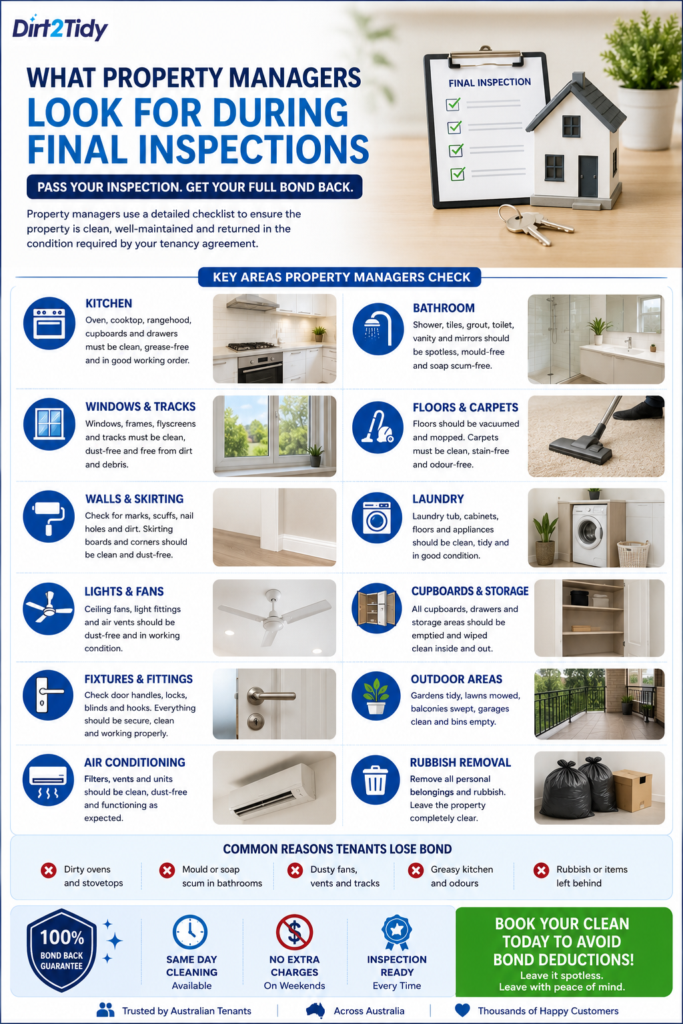
What Property Managers Look for During Final Inspections
Overall Cleanliness
The first impression matters.
Property managers often notice overall cleanliness before examining individual rooms. Dust, unpleasant odours, dirty floors, or clutter can immediately suggest that deeper cleaning has been overlooked.
They generally expect the property to be:
- Dust-free
- Vacuumed thoroughly
- Professionally presented
- Free of rubbish
- Fresh-smelling
A consistently clean appearance sets a positive tone for the rest of the inspection.
Kitchen Cleanliness
The kitchen is one of the most closely inspected rooms because grease and food residue build up over time.
Property managers usually inspect:
Oven
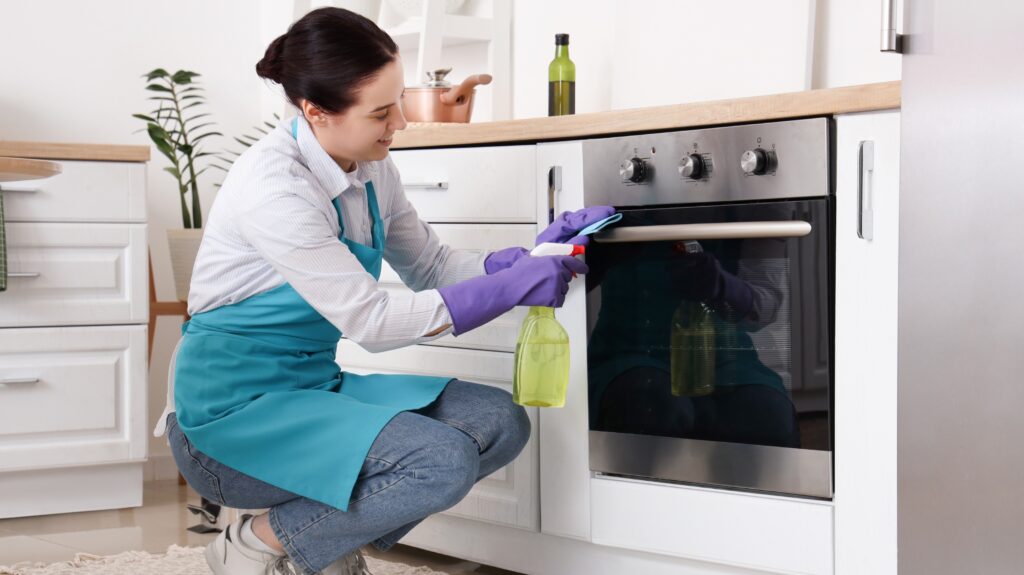
A dirty oven is one of the most common reasons tenants lose part of their bond.
Inspectors check for:
- Burnt food residue
- Grease buildup
- Clean oven racks
- Spotless oven door glass
Cooktop
Gas burners and electric cooktops should be free from:
- Oil stains
- Burn marks
- Food spills
Rangehood
Filters often collect grease that tenants forget to clean.
The rangehood should be:
- Degreased
- Dust-free
- Working properly
Cupboards and Drawers
Every cupboard should be emptied and wiped inside and outside.
Property managers look for:
- Crumbs
- Sticky residue
- Dust
- Food stains
Bathrooms Must Look Spotless
Bathrooms receive careful attention because moisture encourages mould and soap scum.
Inspectors typically examine:
- Shower screens
- Tiles
- Grout
- Mirrors
- Sink
- Vanity
- Toilet
- Exhaust fans
- Bathtub
Even small mould patches can raise concerns during the inspection.
Windows and Window Tracks
Many tenants clean the glass but forget the window tracks.
Property managers often inspect:
- Window glass
- Flyscreens
- Frames
- Sliding tracks
- Window sills
Dust, insects, leaves, and dirt commonly accumulate in tracks, making them one of the easiest areas to overlook.
Floors and Carpets
Clean flooring significantly improves the overall appearance of a property.
Depending on the flooring type, inspectors may check for:
Carpet
- Vacuumed thoroughly
- No stains
- No unpleasant odours
- No pet hair
Professional carpet cleaning may be recommended or required under certain lease agreements, especially after pets or heavy use.
You may also like to read about- “Bond Cleaning Darwin Cost Guide 2026: Prices, Inclusions & Inspection Tips”
Hard Floors
Property managers expect:
- Swept
- Mopped
- No sticky residue
- No excessive scratches caused by negligence
Walls, Doors and Skirting Boards
Walls often accumulate fingerprints, marks, and dust over the course of a tenancy.
Inspectors commonly notice:
- Scuff marks
- Pencil marks
- Nail holes
- Dirty light switches
- Dusty skirting boards
Cleaning these areas can dramatically improve the property’s presentation.
Light Fixtures and Ceiling Fans
These areas are frequently forgotten.
Property managers often inspect:
- Ceiling fans
- Light fittings
- Lampshades
- Air-conditioning vents
Dust accumulation here may suggest incomplete cleaning elsewhere.
Laundry Areas
Laundry rooms should be left clean and functional.
Inspectors may check:
- Laundry tub
- Cabinet interiors
- Floors
- Washing machine connections
- Lint around dryers
Outdoor Areas
If the rental includes outdoor spaces, these are usually part of the final inspection.
Common inspection points include:
Gardens
- Lawns mowed
- Garden beds tidy
- Weeds removed
Balconies
- Swept
- No rubbish
- Clean railings
Garage
- Empty
- Oil stains removed where possible
- Floor swept
Bins
Bins should be emptied and clean before handing over the keys.
Air Conditioning and Ventilation
Air conditioners are another frequently overlooked area.
Property managers may inspect:
- Dusty vents
- Dirty filters
- Visible mould
- Proper operation
Cleaning accessible filters can improve presentation and air quality.
Common Reasons Tenants Fail Final Inspections
Understanding common mistakes helps you avoid them.
Some of the biggest issues include:
- Dirty ovens
- Bathroom mould
- Greasy kitchen surfaces
- Dust on ceiling fans
- Unclean windows
- Pet hair
- Forgotten cupboards
- Dirty skirting boards
- Overflowing bins
- Left-behind belongings
Many of these problems are preventable with a detailed cleaning checklist.
Actionable Tips to Pass Your Final Property Inspection
Start Cleaning Early
Avoid leaving everything until the last day.
Begin cleaning several days before moving out so you have time to revisit missed areas.
Use a Room-by-Room Checklist
Working systematically reduces the chance of forgetting important tasks.
Focus on one room at a time rather than cleaning randomly.
Pay Attention to Small Details
Property managers often notice:
- Door handles
- Light switches
- Window tracks
- Exhaust fans
- Skirting boards
Cleaning these areas creates a polished finish.
Remove All Personal Items
Before inspection:
- Empty cupboards
- Remove furniture
- Clear storage areas
- Dispose of rubbish
The property should be completely vacant unless otherwise agreed.
Repair Minor Damage
Simple repairs may include:
- Replacing blown light bulbs
- Tightening loose handles
- Filling permitted picture hook holes
- Removing adhesive hooks
Always check your tenancy agreement before making repairs.
Consider Professional End of Lease Cleaning
Professional cleaners understand exactly what property managers expect during inspections.
An experienced end of lease cleaning service follows detailed cleaning checklists designed to meet real estate standards.
This is especially helpful for larger homes or busy tenants preparing for a move.
Why Professional End of Lease Cleaning Makes a Difference
Professional cleaners have specialised equipment and experience cleaning rental properties to inspection standards.
Benefits include:
- Thorough cleaning of overlooked areas
- Professional oven cleaning
- Carpet cleaning options
- Bathroom sanitisation
- Reduced moving stress
- Greater confidence before inspection
Many Australian tenants choose Dirt2Tidy because professional end-of-lease cleaning saves time while helping present the property at its best.
Whether you’re moving from an apartment in Sydney, a townhouse in Melbourne, or a family home in Perth, having experienced cleaners can make the final preparation much easier.
With customised cleaning solutions across major Australian cities, Dirt2Tidy supports tenants looking to leave their rental in excellent condition and reduce the risk of avoidable bond deductions.
You may also like to read about- “Can you reschedule a rental inspection?”
Preparing for Inspection Day
Before handing over the keys, complete one final walkthrough.
Check:
- Every room
- Inside cupboards
- Under sinks
- Garage
- Outdoor areas
- Laundry
- Windows
- Bathrooms
Pretend you’re seeing the property for the first time. Small details become much easier to spot with a fresh perspective.
Frequently Asked Questions
What do property managers check during a final inspection?
Property managers typically inspect cleanliness, damage, appliances, kitchens, bathrooms, flooring, windows, outdoor areas, and compare the property’s condition with the original entry report.
Can I lose my bond because of cleaning?
Yes. If the property is not returned in a reasonably clean condition according to your tenancy agreement, cleaning costs may be deducted from your bond.
Is professional end of lease cleaning worth it?
For many tenants, yes. Professional cleaners know which areas property managers inspect most closely and can help ensure the property is presented to a high standard.
Do property managers inspect ovens?
Absolutely. Ovens are among the most frequently checked areas because grease and burnt food are common reasons for bond disputes.
What is considered fair wear and tear?
Fair wear and tear refers to normal deterioration from everyday use, such as faded paint or lightly worn carpet. It does not include neglect, excessive dirt, or tenant-caused damage.
How long does a final property inspection take?
Most inspections take between 20 and 60 minutes, depending on the property’s size and condition.
Final Thoughts
Knowing what property managers look for during final inspections can significantly improve your chances of a smooth move-out and a full bond refund. From sparkling kitchens and sanitised bathrooms to spotless windows and tidy outdoor areas, attention to detail is the key to success.
Planning ahead, following a comprehensive cleaning checklist, and addressing overlooked areas can make all the difference. If you’re short on time or want added peace of mind, professional end-of-lease cleaning is a practical solution that helps ensure your rental is inspection-ready.
For tenants across Sydney, Melbourne, Perth, Brisbane, Adelaide, Canberra, and the Gold Coast, leaving a property in excellent condition is one of the best ways to protect your bond and end your tenancy on a positive note.
Your time is precious spend it wisely! Book your clean now and let Dirt2Tidy handle the hard work for you.