Assess the carpet before choosing chemistry
Identify the fibre, construction, backing, colour, pile and any care label before applying a solution. Wool, synthetic, plant and blended carpets can have different limits for heat, moisture, agitation and pH. Previous spot treatments, pet incidents, water exposure and loose or damaged backing also affect what is suitable.
Match the solution to the soil
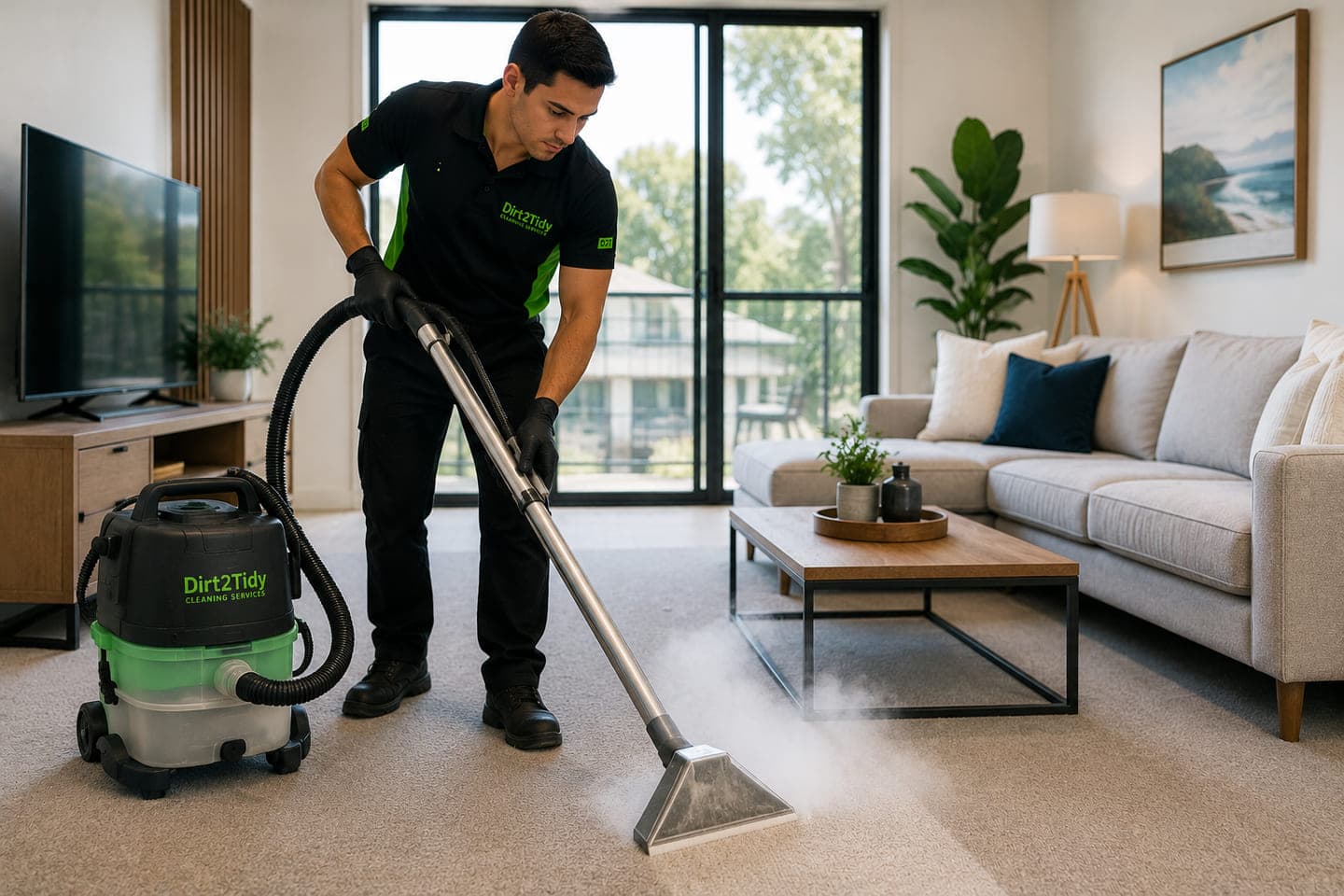
A cleaner may use a labelled pre-treatment, extraction solution or low-moisture product when it is compatible with the carpet and equipment. Food residue, greasy soil, dust and some stains need different approaches. The right result comes from dosage, dwell time, agitation and recovery, not simply using a stronger chemical.

Control product, moisture and drying
Solutions should be measured and used according to their instructions. Excess detergent can leave residue, while excess water can reach backing or underlay and extend drying. Protect furniture, keep people and pets away from damp carpet, provide safe airflow and follow the cleaner's drying directions.
Know the limits of a carpet solution
No solution can repair burns, tears, worn pile, dye loss, delamination or damaged backing. Unknown chemicals, biological contamination, mould-like growth and water damage may require another specialist. Dirt2Tidy can assess a suitable carpet-cleaning scope before you request a booking.