
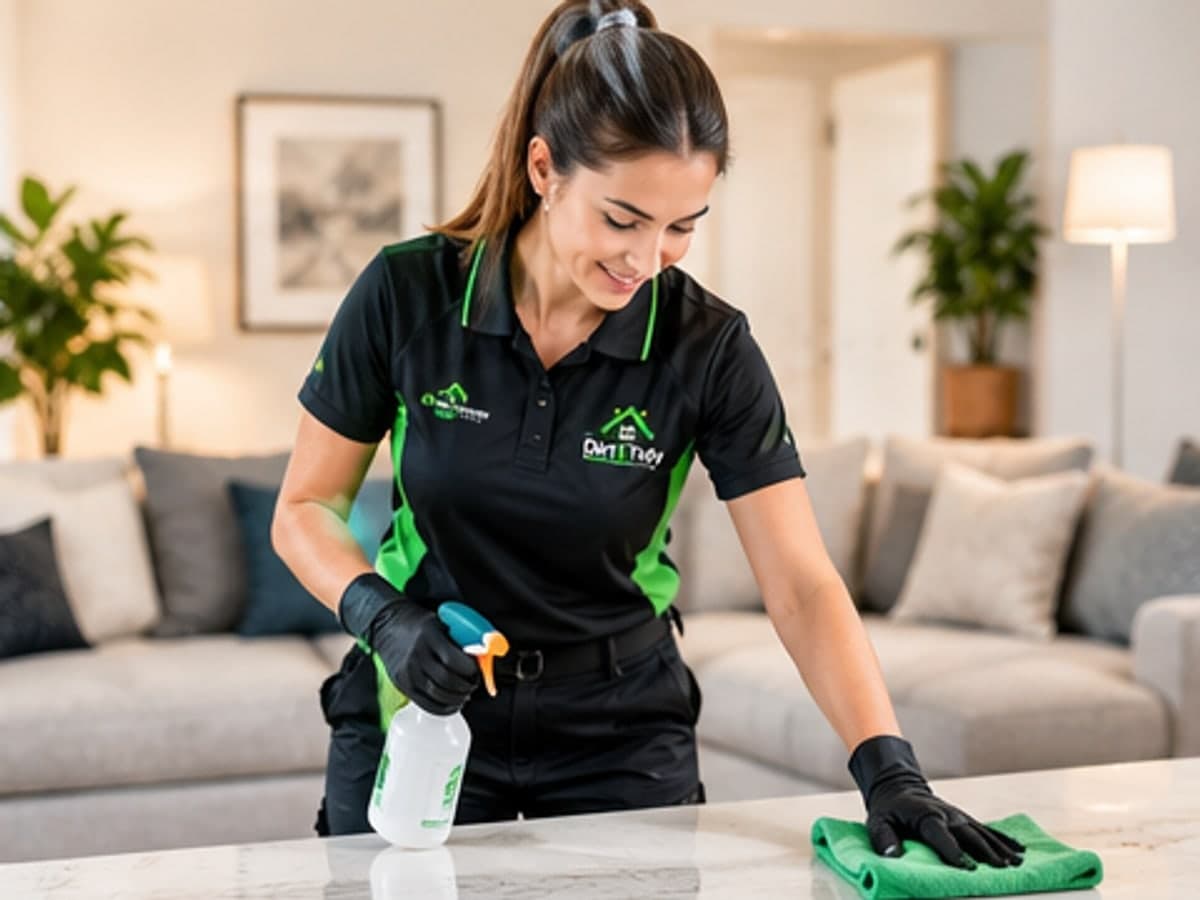
Separate routine dirt from a specialist problem
Ordinary dust, crumbs and accessible surface soil may suit routine cleaning. Unknown chemicals, bodily fluids, sharps, extensive mould, pest contamination, valuable objects or delicate finishes can require trained specialist handling.
Check the surface before treating a stain
Read care labels for textiles, upholstery, flooring and appliances. Test a compatible product discreetly where the maker permits, and blot rather than aggressively scrub a spill. Avoid heat or moisture if the material guidance is unknown.
Use one product at a time
Follow the label and never mix cleaning products. Do not combine bleach with acids, ammonia or other cleaners. Ventilate as directed and keep products away from children and pets.
Stop if the material reacts
Discolouration, finish transfer, spreading or lingering odour are reasons to stop and reassess. A cleaner cannot promise every stain will disappear; arrange a specialist assessment for persistent or high-value damage.


