
What do I do when I spill water on my carpet?

Accidentally spill water on my carpet? Learn quick, effective steps to prevent damage, mold, and stains, ensuring your carpet stays fresh and clean.

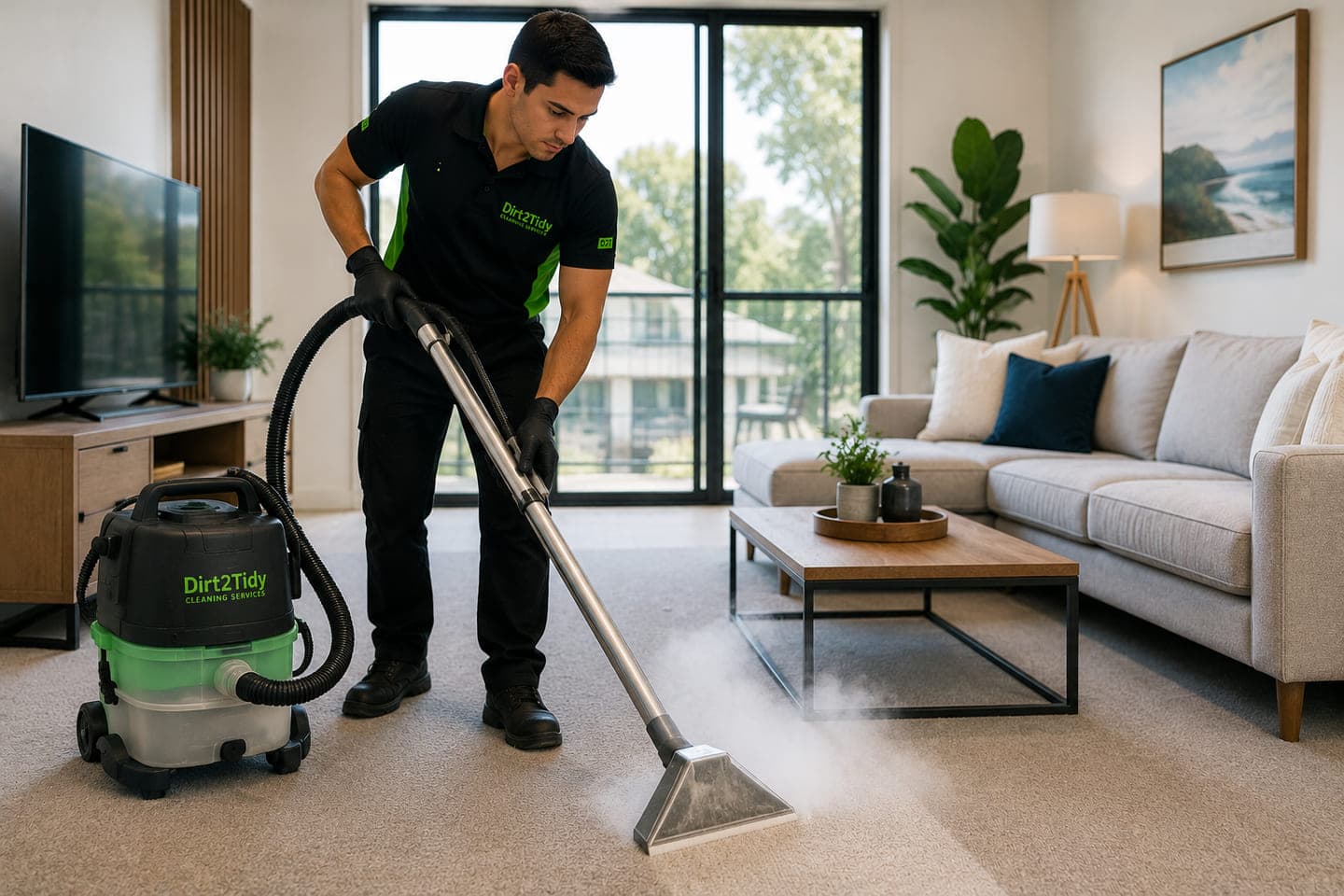
Carpet steam cleaning treatment in an Australian living room

How can you tell if your spill water on my carpet, even if it doesn’t look damp? Prior to drying your wet carpet, think about what to do How to Spot Hidden Carpet Moisture or Water Damage Sanitizing Walls and Baseboards: When Is It Needed?

Avoid Walking on Wet Carpet: Suggestions for Drying a Wet Carpet Consider Cleaning Walls and Baseboards Consider Steam Cleaning After a Water Spill Many of you are aware that carpet and damp don’t get along well. If a damp carpet is not quickly dried, problems may arise.

One of the numerous issues that might arise and have a detrimental impact on your health is mould development if you dont speed up the drying process. But mould isn’t the only troublemaker lurking in a soggy carpet.

A moist carpet may stink up your house in addition to encouraging mold growth so keep air dry after water spills .

That unmistakable musty odor is often the first sign that moisture is trapped in your carpet fibers, and no amount of vacuuming or air freshener will chase it away until the root of the problem is addressed.

Letting wet carpet sit doesn’t just risk a smelly living room—it can also damage the padding underneath and even your subfloor. If left untreated, the dampness becomes a breeding ground for mold and mildew, which love nothing more than a dark, warm place to multiply.

Once mold gets into the carpet pad, it’s nearly impossible to get rid of, and it can quickly start affecting your home’s air quality. This is especially dangerous for anyone sensitive to allergens, including kids and pets, and could lead to lingering allergy symptoms or frequent sickness in your household.

In short: drying your carpet promptly isn’t just about appearances or odor—it’s essential for a healthy, comfortable home. A moist carpet may stink up your house in addition to encouraging mold growth so keep air dry after water spills.

It should go without saying that you must immediately seek expert water damage repair services if your carpet fibers have sustained any kind of water damage. Before it becomes worse, you may also figure out how to dry it yourself.

It might sound odd, but sometimes a carpet can be damp without actually looking wet to the naked eye. Moisture often hides beneath the surface, making it tricky to spot. For instance, you might overlook a slow leak behind a sofa or in a quiet corner until the effects start cropping up.

So how do you sniff out sneaky moisture? Follow your nose: One of the earliest indicators is an unpleasant, musty odour wafting from the carpet. This smell tends to linger no matter how many times you vacuum or spray a little air freshener, and it’s often the tip-off that something is amiss below.

Check for persistent health symptoms: If you or your family suddenly experience more allergies, respiratory issues, or the pets seem to be sneezing more, hidden dampness could be the culprit. Look closely at the carpet: Dampness doesn’t always come with puddles.

Sometimes you’ll notice the carpet changing colour in certain patches or looking just a shade off from the rest. Discolouration often points to underlying moisture. Touch test: If you suspect a problem area, press a paper towel or cloth firmly onto the carpet and see if it comes up damp—it’s a low-tech but effective trick.

While it’s important to dry the wet area of your carpet as soon as possible after a leak or water damage, if you don’t take care of a few things beforehand, the effort won’t be successful.

Detecting hidden moisture in your carpet isn’t always obvious until the effects start to build up. One of the earliest signs is a stubborn, unpleasant smell—think musty or sour—that just doesn’t disappear, no matter how many times you vacuum. This odor can quietly invade your home’s air, making every room feel less than fresh.

But that’s not all.

Keep an eye out for: Lingering musty scent – persistent even after cleaning Increased allergy symptoms or ongoing colds among people or pets in the house Patches of discoloration or damp spots on the carpet that don’t match the rest Walls or baseboards near the carpet feeling damp to the touch If you spot any of these signs, there’s a good chance moisture has made itself at home in your carpet—and it’s time to take action before things get worse.

You might be wondering if you need to sanitize your walls or baseboards after a water spill. The answer depends on how close the water came to these surfaces.

If the spill reached right up to the walls or baseboards, it’s wise to give them a quick wipe-down with a mold-targeting cleaner, like one containing hydrogen peroxide or a store-bought mold remover. This extra step helps prevent mold or mildew from taking hold in those crevices.

However, if the damp area stayed clear of the walls and baseboards, you can usually skip this chore. Just focus on drying the carpet and you’ll be set! You must locate the source of the leak and fix it before drying your carpet.

To prevent further harm to the carpet, you must get the leak repaired, regardless of whether it was caused by a broken pipe, a leaky roof, or another problem. Furniture and other things Sitting on a damp carpet can prevent it from drying properly.

Everything on the carpet should be moved to a tidy, dry area. Handle Furniture Properly If any of your furniture has been resting on the wet carpet , take extra care to move these items to a dry location as soon as possible.

When table legs or chair bottoms are left sitting on damp carpet, both the wood and the carpet can end up worse for wear, facing issues like mold, warping, or staining. To help both your carpet and your furniture recover: Relocate furniture to a spot where air can circulate around it.

If possible, stand wooden pieces on towels or risers so they dry evenly and avoid water absorption. Wipe off any moisture from the undersides or legs. Allow the area beneath to air out completely before placing items back.

Taking these steps right away can help prevent lasting damage and make the drying process much more efficient. Walking on a damp carpet may wear it down owing to its delicate state, in addition to bringing in dirt.

To avoid damaging your hard work, bring out any object that will require you to walk back into the room before you start drying your carpet. Start by removing water-soaked padding off the carpet. The amount of water on the carpet will determine the kind of equipment you employ for this procedure.

A submersible pump and a shop vac work well to remove a lot of water from carpet that has been thoroughly saturated with it. Use only the shop vac if the water doesn’t entirely cover your carpet.

Conventional vacuum cleaners are not designed to handle water suction, thus a shop vac has higher suction force than a regular vacuum. You may rent a shop vac and submersible pump from your local hardware store.

After using a little baking soda to remove excess moisture , you’ll find it’s especially effective at lifting and absorbing trapped dampness from the carpet fibers. Just sprinkle a generous layer across the affected area, let it sit for at least 30 minutes (longer for larger spills), and then vacuum it up thoroughly.

Not only does this help accelerate drying, but it also leaves your carpet smelling fresher and feeling softer underfoot. Can Steam Cleaning Help Remove Excess Water?

Upholstery cleaning on a sofa in an Australian lounge
Keep cleaning moving

Related Cleaning Services

More from Dirt2Tidy

Related Cleaning Guides