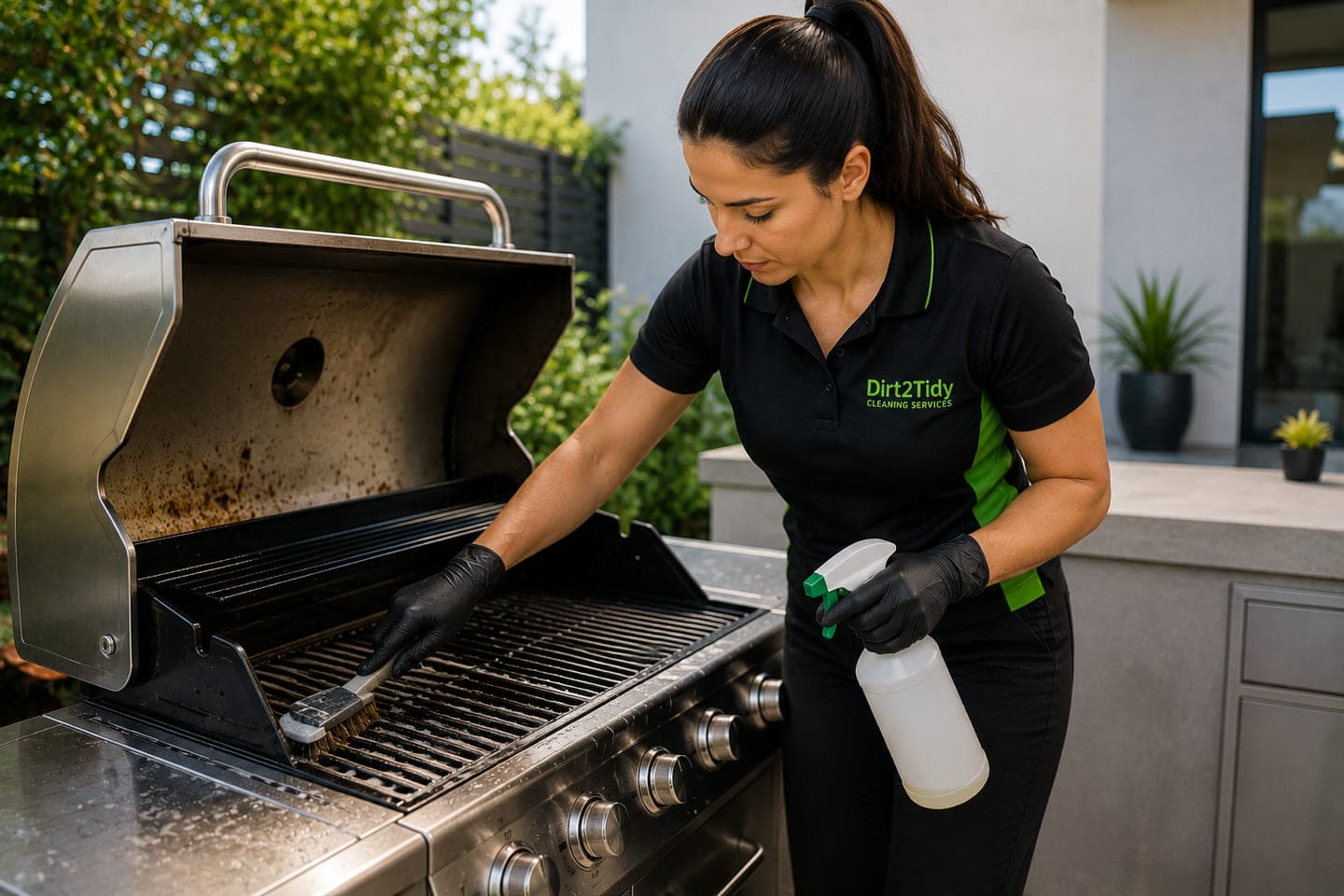
Clean grates according to their material
Cast iron, porcelain-coated, enamel and stainless grates have different care requirements. Let the BBQ cool completely and use only a brush or cloth approved for the surface. Check for loose bristles or debris before cooking.

Handle the hood and exterior gently
Wipe accessible exterior surfaces with a compatible labelled product. Avoid abrasives, scraping, pressure washing or acidic cleaners unless the manufacturer permits them for the exact finish.
Empty the grease tray safely
Wait until all components are cool, remove the tray only if the manual allows and dispose of collected grease through an appropriate waste route. Do not pour fat into a sink, toilet or stormwater drain.
Do not dismantle burners or controls
Keep liquid out of burner ports, ignition systems, hoses and electrical parts. Gas leaks, blocked jets, damaged controls and faulty igniters require a qualified technician rather than routine cleaning.
Confirm any professional task list
If requesting a service, identify the BBQ type, condition, parts to be cleaned and access. Confirm which components and products are included. Cleaning cannot repair appliance faults or guarantee food-safety or cooking results.