Strata Cleaning in Sydney: Scope, Buildings and Quotes

A Sydney strata cleaning contract lives or dies on the detail that's easy to skip: exactly which areas are common property, what gets cleaned on each visit, how access and security work, and where the cleaning scope ends and a specialist trade begins. Sydney's towers, mixed-use buildings and strata rules add their own constraints — single service lifts, fob access, shared lobbies, after-hours windows. This guide walks through how to assess the building, define the schedule, verify a provider, and compare written quotes honestly.

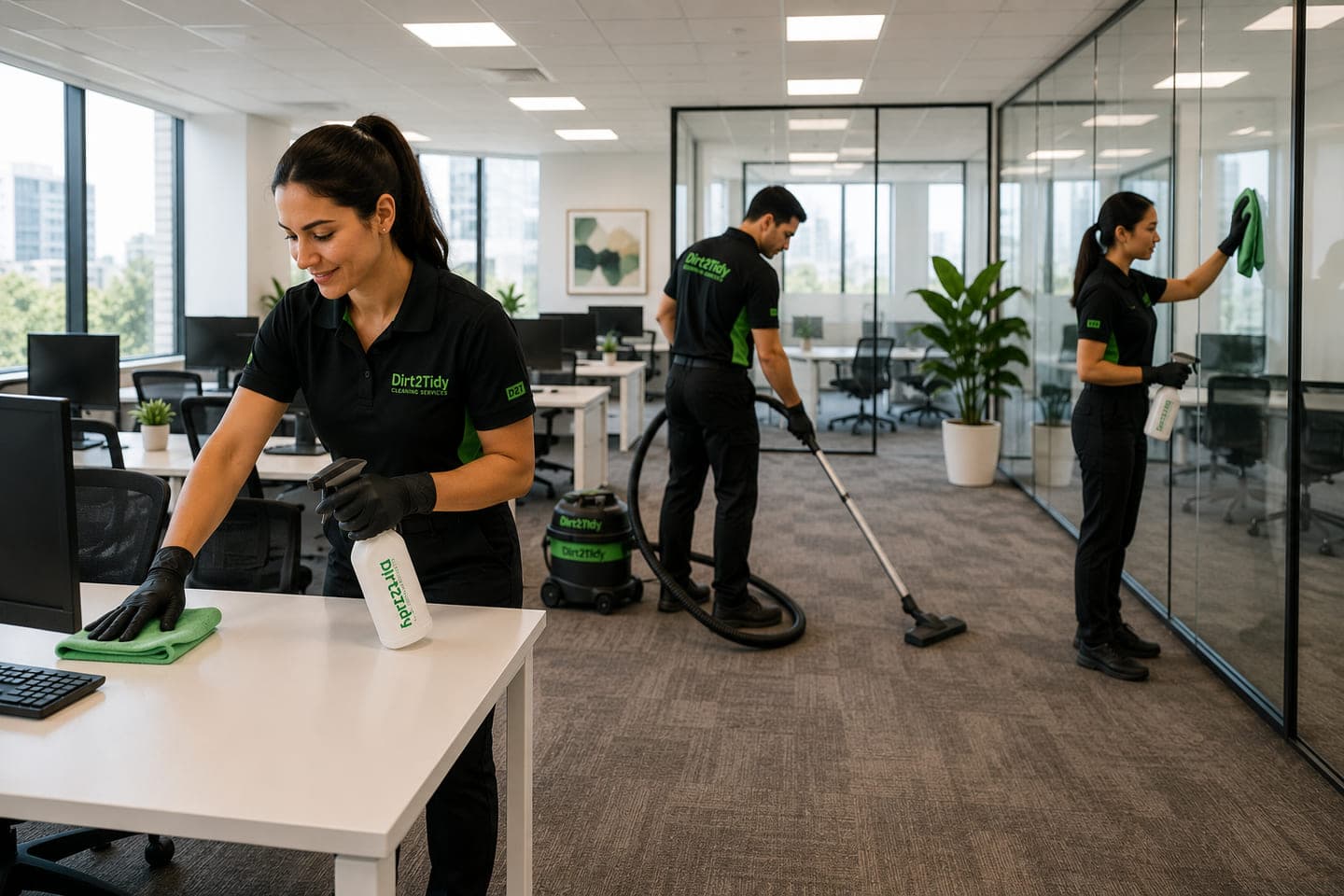
Commercial cleaning team working in a modern Australian office

Assess the building and its shared areas

List the common areas specifically — entrances, lobbies, lifts, corridors, stairs, washrooms, bin areas, car parks and any outdoor common spaces — along with building size, occupancy, surfaces, access restrictions, waste arrangements, security and strata rules.

In Sydney, that also means noting the building type: a high-rise tower, a mixed-use centre, a heritage block or a low-rise villa complex each has different access, lift and working-hour realities. The assessment should be site-specific rather than a generic 'strata clean' label that assumes one building looks like another.

Define the schedule and tasks in writing

Specify what's cleaned on each visit, the frequency, and any periodic work such as windows, carpets, floors or pressure cleaning. Confirm products, equipment, consumables, high-access exclusions and how seasonal or one-off requests are handled.

A strata contract that's written down and agreed is defensible at an AGM; one that's assumed is a source of disputes later. The schedule should also account for Sydney's coastal and urban realities — salt film on glass, windblown grit in lobbies, and the higher footfall of a busy mixed-use building.

Verify the provider's arrangements

Ask who will actually attend, how keys and access are managed, who supervises the work, how incidents are reported, and what current insurance or qualifications apply. For a Sydney strata building, that includes how the provider handles lift bookings, after-hours access, security protocols and strata by-laws — not just the cleaning itself.

A provider who can answer these plainly and has clear, documented processes is showing the kind of reliability a body corporate needs, rather than just quoting a low per-visit rate.

Compare current written quotes honestly

Compare providers on the written scope, not the headline per-visit price: what's included and excluded, the frequency, high-access and specialist exclusions, how consumables and one-off requests are handled, and the terms. A low per-visit figure that quietly excludes the areas the strata actually cares about is a common trap.

Get the same brief to several providers and judge on scope, access handling and terms — the building's common areas are shared property, and the contract should reflect that reality.

Where strata cleaning stops

A common-area clean covers the shared spaces on the owners corporation's list — it doesn't extend into private residences, and heavy one-off items like roof and gutter work, external pressure washing beyond agreed paths, car-park line marking or any building repair sit outside it under their own trades.

Bin centres can be emptied and hosed as an agreed line, but the waste service itself belongs to the council or a contracted hauler. Keeping the scope written and shared-area only is what makes a strata contract defensible at an AGM and keeps the liability where it belongs.

Keep cleaning moving

Related Cleaning Services

More from Dirt2Tidy

Related Cleaning Guides

FAQ

FAQs

Everything about bookings, coverage and what to expect.

A clear list of the common areas cleaned, what's done on each visit, the frequency, any periodic work, how products and consumables are handled, high-access and specialist exclusions, and the terms — including access, supervision, incident reporting and insurance.

It should also note how seasonal or one-off requests are managed. A quote that's specific about the building and its shared areas is far more useful than a generic 'strata clean' price that assumes one building looks like another.

Car parks and windows may be included, but they're commonly separate or periodic lines rather than defaults — car-park sweeping or pressure washing, and interior or exterior window cleaning, each need their own method, equipment and access.

Confirm in the written scope which are in and how often, so the routine contract stays focused and the specialist work is booked and costed honestly rather than assumed into a flat visit.

No — a cleaning contract maintains the common areas, but compliance with strata, work health and safety and building obligations is a broader matter for the owners corporation and its strata manager.

A good provider supports compliance by documenting work, reporting hazards and incidents, and carrying appropriate insurance, but they can't certify the building compliant. Treat cleaning as one part of the building's maintenance obligations, not a substitute for the body corporate's own duties.

Put the same detailed brief to several — the building type and size, the common areas, the surfaces, access restrictions, waste arrangements, security and strata rules — and compare on written scope, frequency, how access and incidents are handled, insurance and terms.

A Sydney strata provider who understands tower access, strata by-laws and coastal conditions is worth more than a lower per-visit rate that ignores the building's real operating realities.