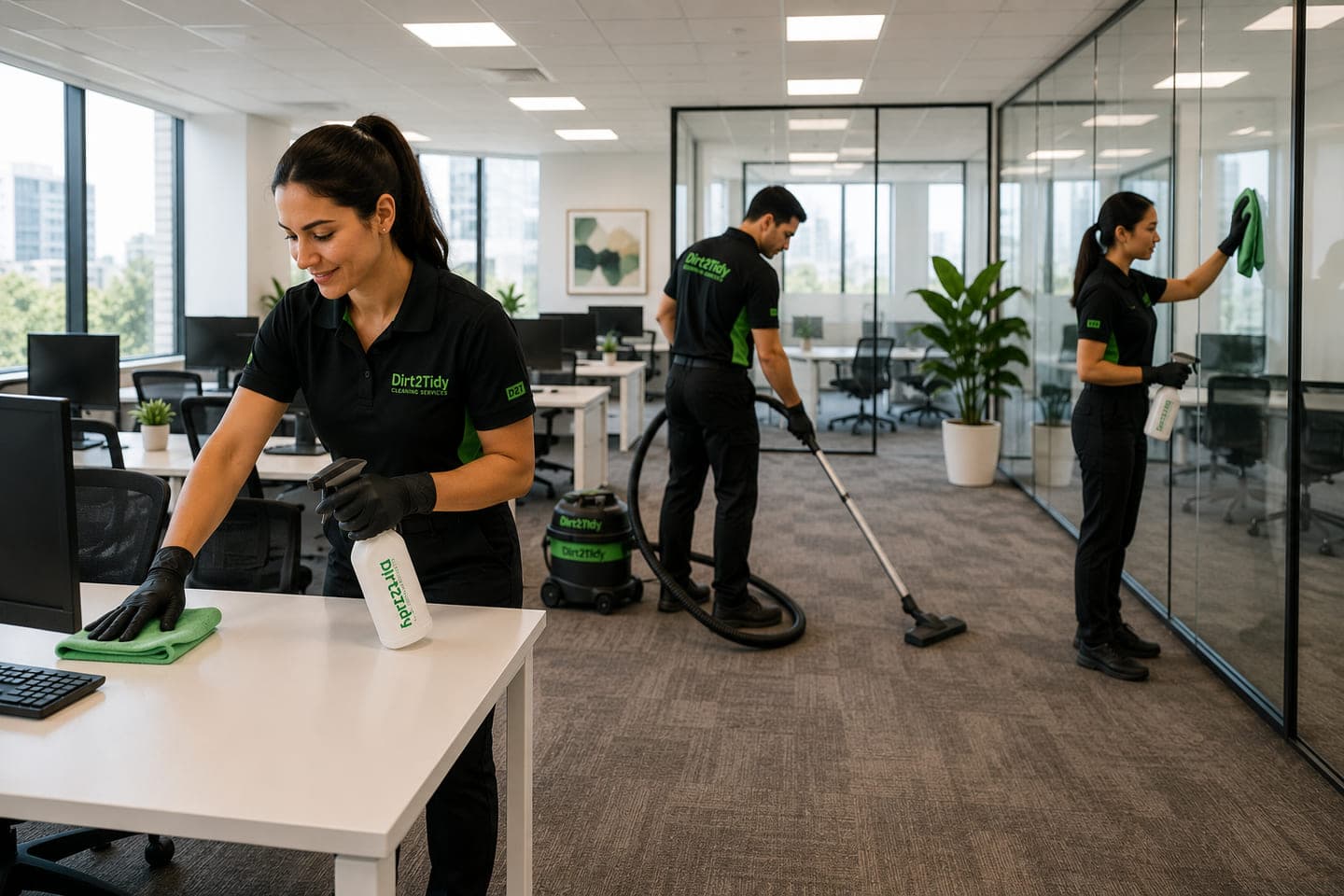
Assess the workplace
List offices, meeting rooms, washrooms, kitchens, floors, shared equipment, occupancy, opening hours and site restrictions. Identify access, keys, alarms, consumables and any industry-specific procedures.
Set task ownership and frequency
Define routine tasks such as bins, floors, washrooms, kitchen surfaces and shared touchpoints. Specify how often each is needed and who is responsible between professional visits. Specialist carpet, window, floor-restoration, pest or HVAC work may be separate.
Use products and methods appropriately
Follow labels and device instructions, especially for electronics, food-contact surfaces and delicate finishes. Store chemicals safely, never mix products and report spills, damage or unknown substances using the workplace procedure.
Review the service agreement
Confirm schedule, products, equipment, access, staff arrangements, inspections, complaint handling and exclusions in writing. Review the scope as occupancy or site use changes. Cleaning is one part of workplace operations and does not certify indoor air quality or health outcomes.