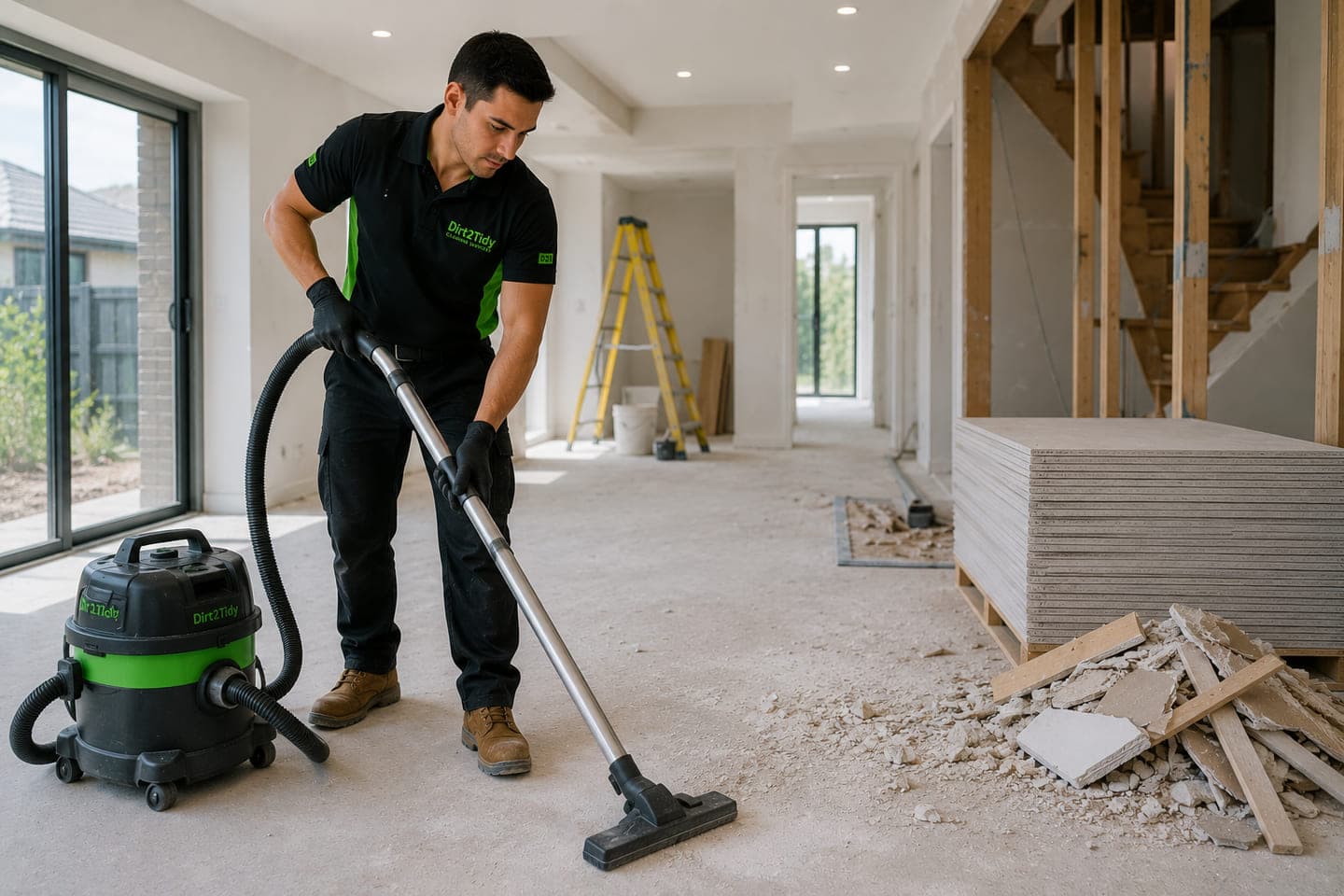
Confirm access before starting
Ask the builder or principal contractor about remaining trades, access restrictions, utilities and finishes that need curing. Keep away from wet coatings, live electrical fittings, sharp debris and restricted construction zones.
Work from reachable surfaces down
List reachable light fittings, frames, sills, cabinets, worktops, bathrooms, windows and floors. Use stable access and tools suited to each material. Do not climb, dismantle fixtures or clean live outlets.

Treat glass, tiles and residue carefully
Paint, silicone, grout haze and adhesive can be difficult to remove and may damage finishes. Check maker instructions and use an appropriate specialist for stubborn residue. Avoid acids, blades, abrasives and pressure unless the surface and provider method allow them.
Separate ventilation and outdoor work
Do not open ducts, replace filters or use pressure on outdoor areas unless included and appropriately assessed. Suspected asbestos, silica, chemical residue or other hazards need specialist handling. Confirm waste, access and exclusions in writing.