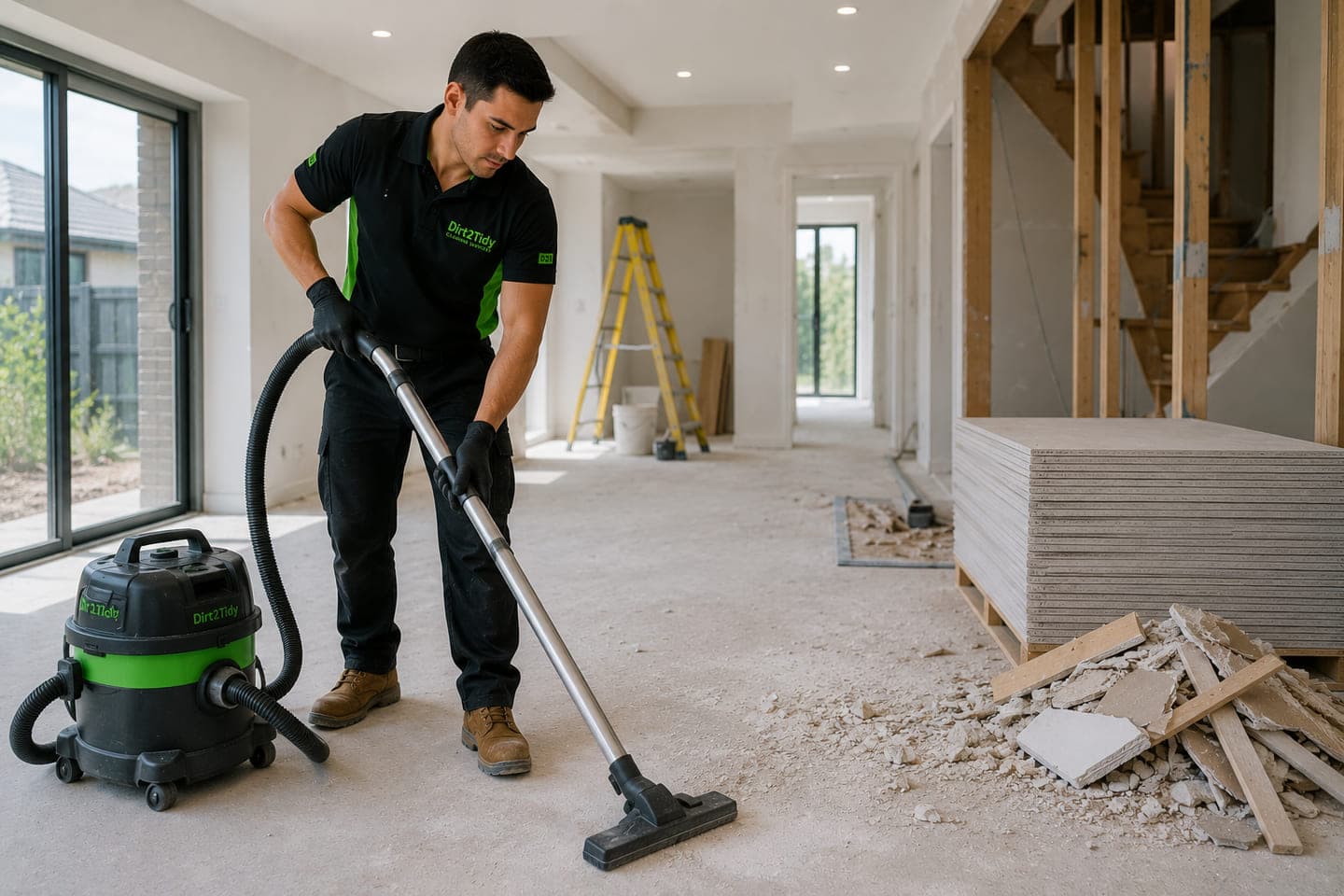
Confirm the renovation is complete
Coordinate with the builder or principal contractor about final trades, access, utilities and surfaces that are ready for cleaning. Do not enter restricted zones or clean around unfinished electrical, plumbing or building work.
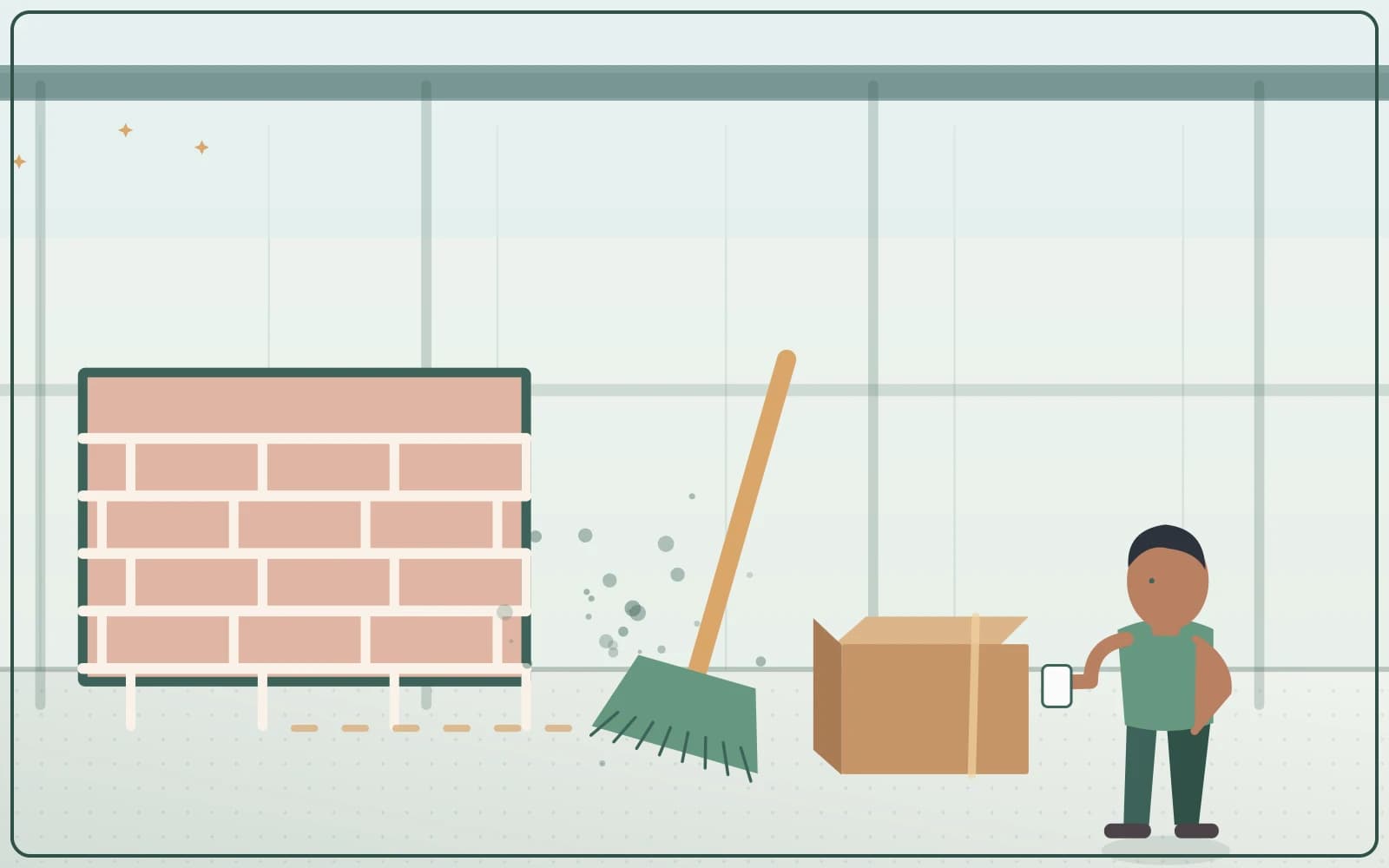
Separate ordinary dust from hazards
Ordinary surface dust can be included in an agreed cleaning scope. Suspected asbestos, silica dust, lead, chemical residues or contaminated material need specialist assessment and handling. Do not sweep or vacuum unknown hazardous dust with household equipment.
Protect new finishes and building systems
Check maker instructions for floors, benchtops, glass, coatings, appliances and ventilation systems. Cleaning does not fix sealant, paint, grout, leaks or installation defects. HVAC servicing and duct cleaning are separate specialist tasks.
Plan handover work and timing
List rooms, access, remaining debris, priority surfaces and any inspection date. Confirm what waste handling, windows, carpets or appliances are included. A clean cannot guarantee a bond, tenant response, inspection result or increased property value.