Set roles before the cleaning visit
Identify the responsible site contact, who clears building waste, who confirms trade completion and who authorises access. Agree work hours, induction, parking, utilities, remaining trades and how changes or damage are reported.
Plan for dust and ordinary residues
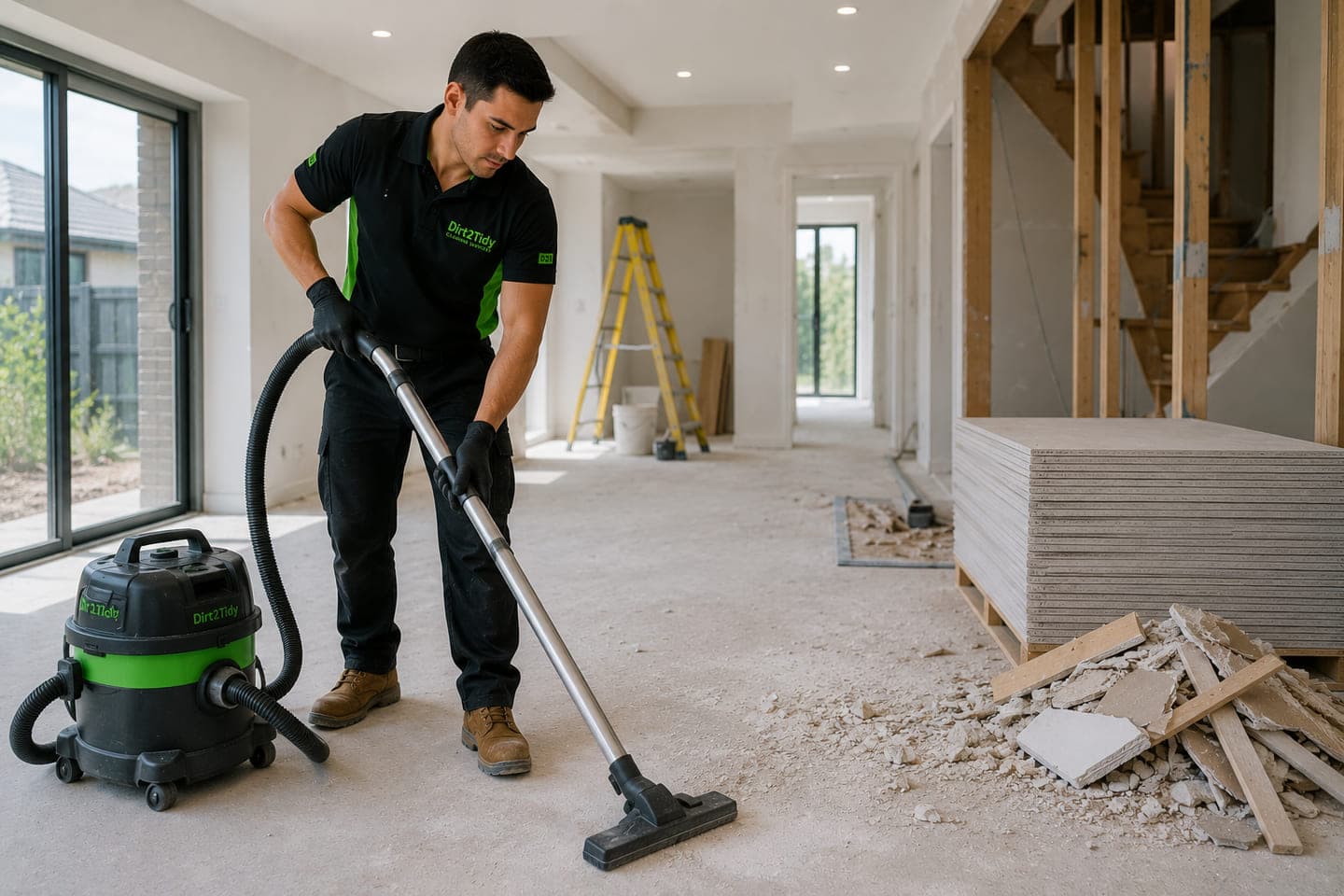
List floors, windows, fixtures, cabinets, bathrooms, kitchens and other surfaces that need cleaning. Ask what equipment and dust-control approach will be used. New finishes and systems may have specific care instructions.
Escalate hazardous materials and unsafe conditions
Suspected asbestos, silica dust, chemical residue, sharps or other hazardous materials are not routine cleaning tasks. Stop work in affected areas and contact the responsible contractor or appropriately qualified specialist for assessment and handling.
Confirm scope and handover limits
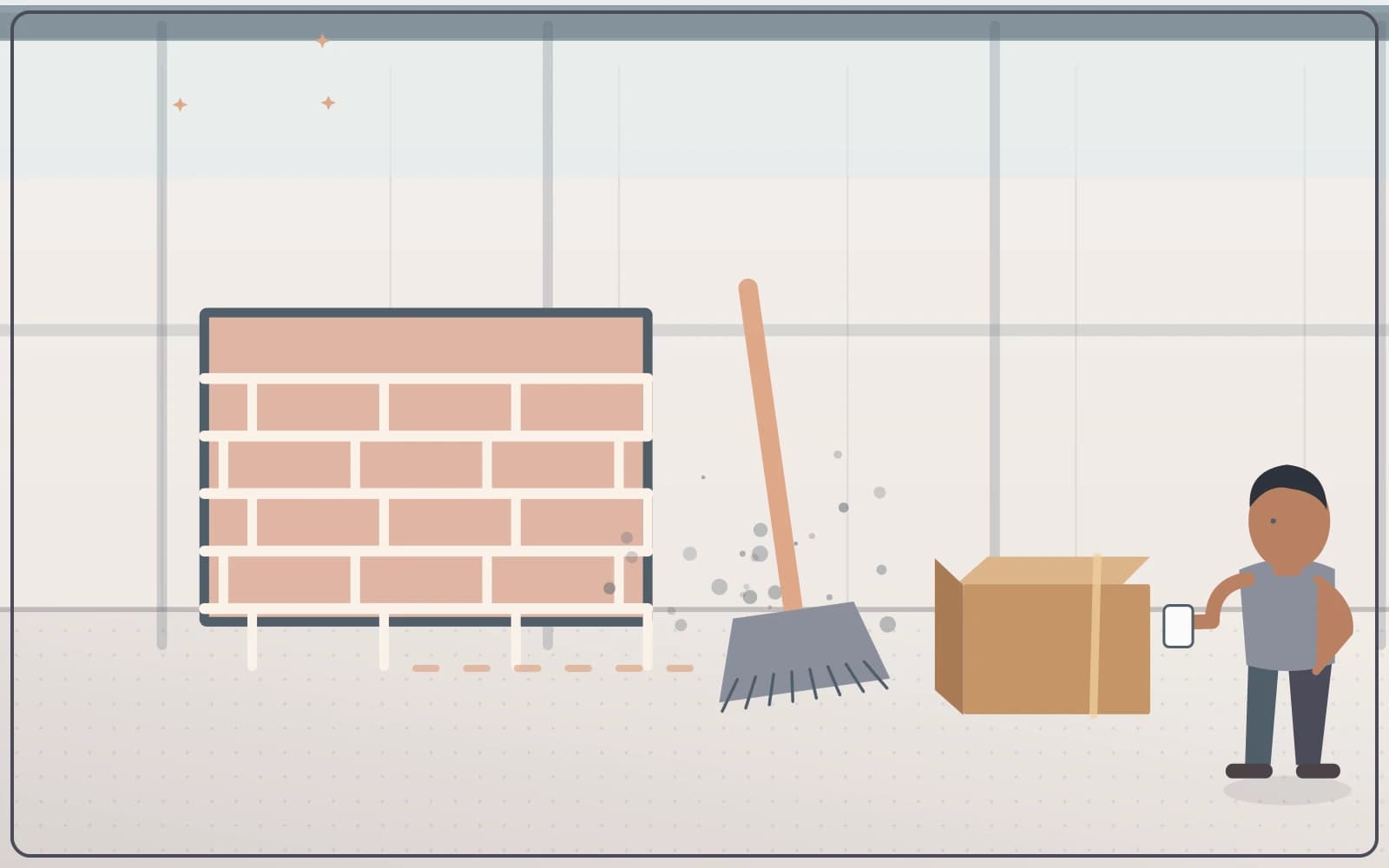
Document inclusions, exclusions, waste handling, access, inspection timing and any revisit terms. Cleaning can prepare agreed surfaces but cannot certify workmanship, regulatory compliance, air quality or occupancy.