Confirm the site is ready
Coordinate with the builder or principal contractor on completed work, utilities, access, remaining trades and surfaces that are ready for cleaning. Keep cleaners out of restricted areas. Suspected asbestos, silica dust, chemical residue or other hazardous material needs appropriately qualified assessment and handling.
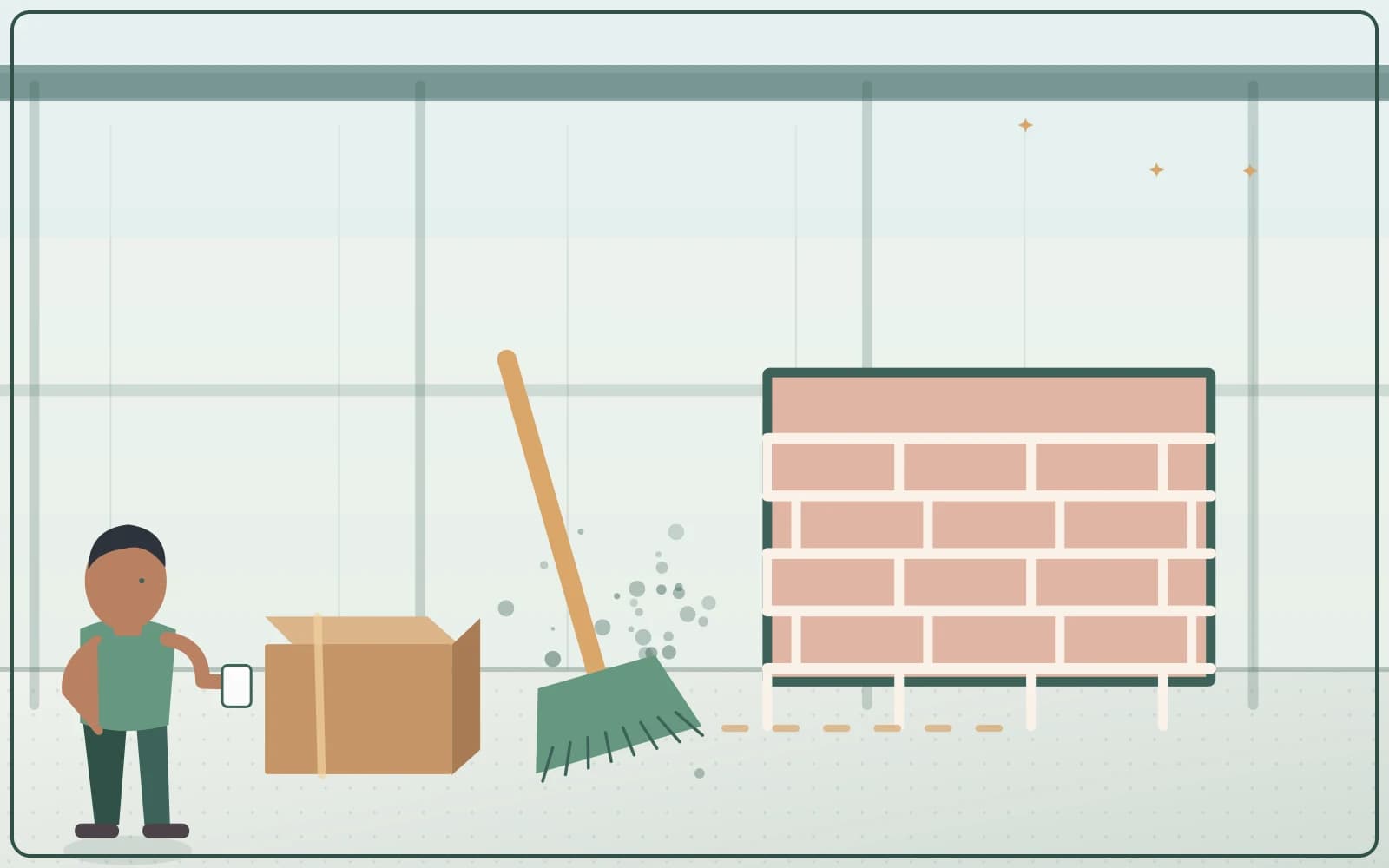
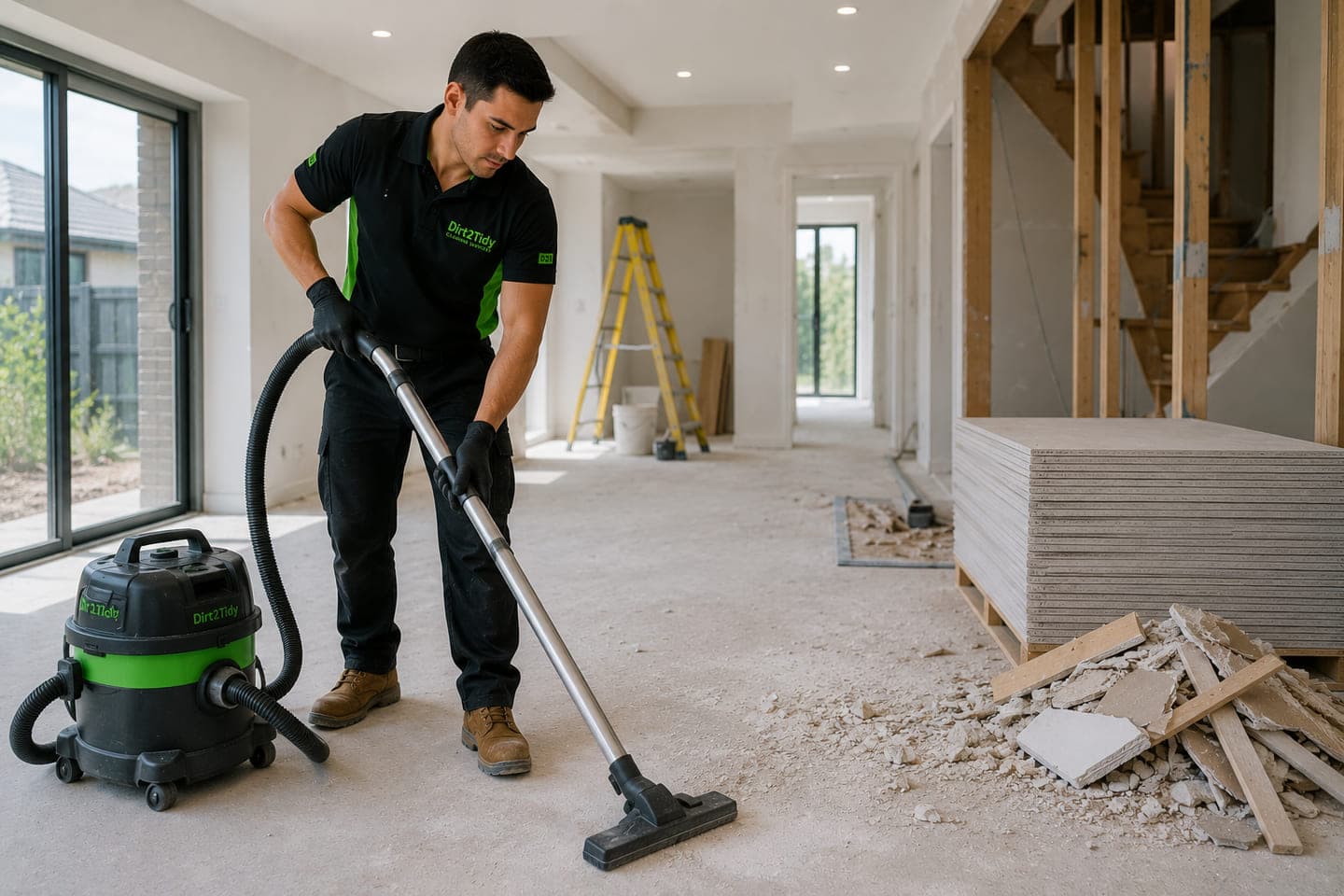
Remove ordinary debris and loose dust
Define who handles packaging and ordinary construction debris, then list accessible fixtures, cabinets, floors, windows and other surfaces for cleaning. Use equipment and dust-control methods suited to the material. Do not dry-sweep hazardous dust or disturb unknown residue.
Protect new finishes and building systems
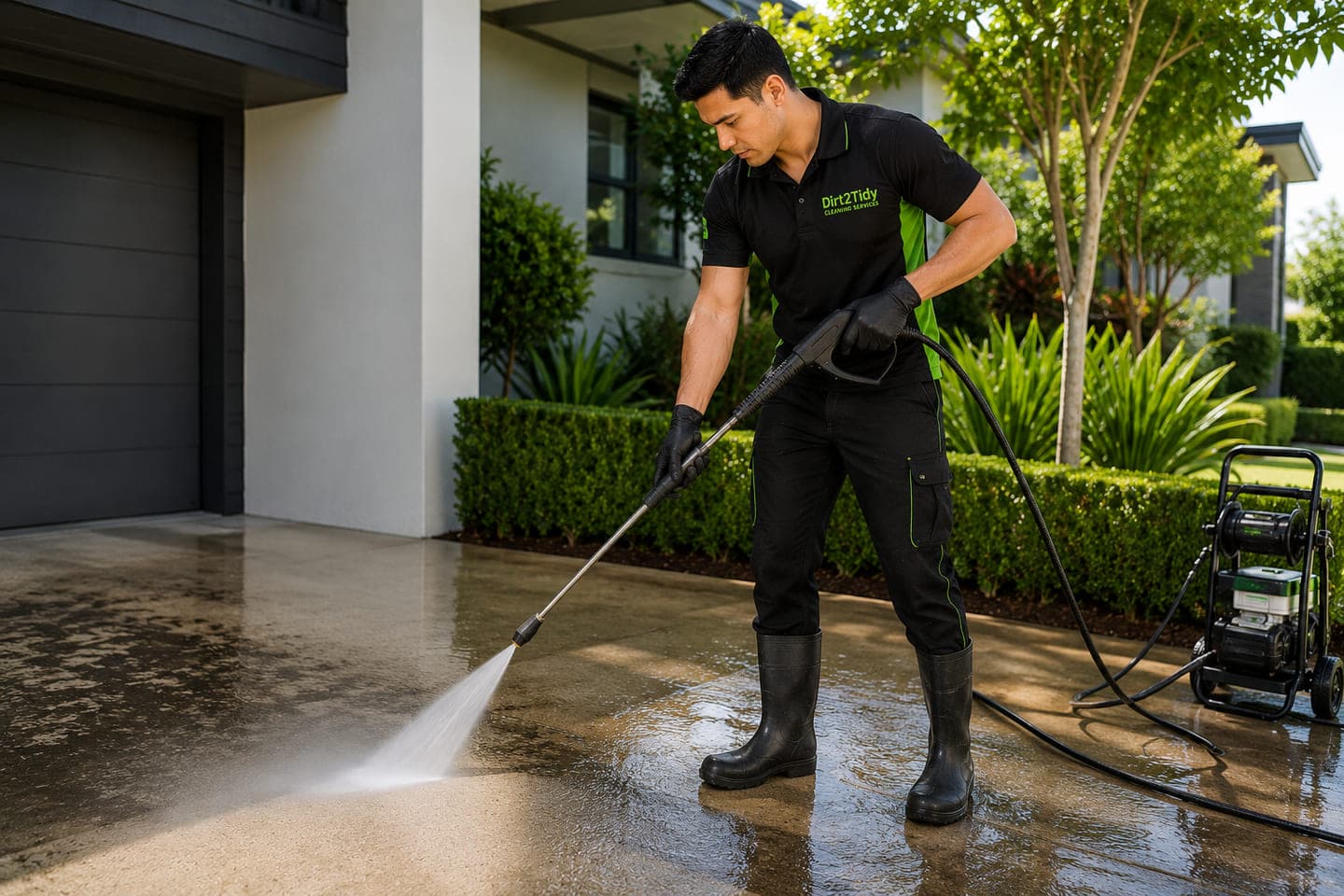
Check maker instructions for flooring, glass, stone, paint, appliances and ventilation systems. Confirm whether wet methods, steam or pressure are permitted. Do not dismantle HVAC equipment, clean live electrical fixtures or remove paint, adhesive or grout without an agreed safe method.
Finish with a documented scope review
Work room by room against the agreed checklist, identify inaccessible areas and document damage or unfinished trade work separately. Confirm final inclusions, repeat visits and variations. Repairs, hazardous waste, pest work and building certification are outside ordinary cleaning.