
Find the source and protect people
Keep children, pets and vulnerable occupants away from wet or contaminated areas, and use gloves when handling soiled materials. Locate repeated accidents, damp underlay, affected furniture and nearby flooring. A recurring problem may also need veterinary, plumbing, building or pest advice rather than another surface clean.
Use a carpet-safe approach
Blot fresh liquid without rubbing, follow the carpet and product instructions and test any treatment in an inconspicuous area. Fibre, dye, backing and underlay determine whether moisture, enzyme products or extraction are suitable. Never mix bleach, ammonia, acids or other chemicals, and do not saturate carpet in an attempt to reach the source.
Know when surface cleaning is not enough
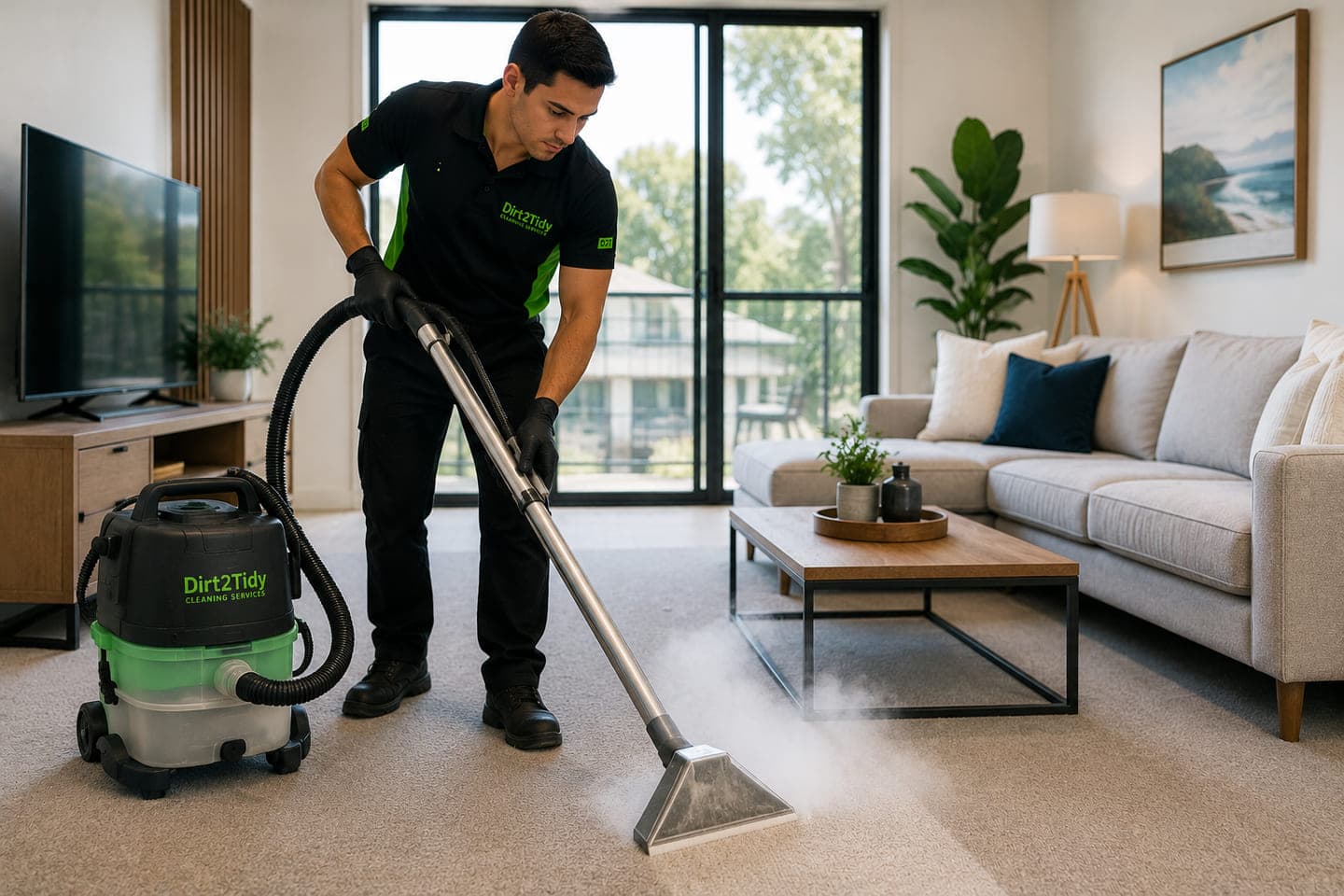
Persistent odour, visible seepage, damaged underlay, repeated wetting or contamination beneath the carpet may need professional remediation or replacement advice. Carpet steam cleaning can address suitable surface soil after the risk is controlled, but it is not a universal treatment for contaminated underlay or a guarantee of odour removal.
Request an honest assessment
Tell the cleaner the location, age of the incident, carpet fibre if known, previous products, pets, moisture and odour. The quote should distinguish carpet cleaning from biohazard, building, veterinary and repair work. Dirt2Tidy can discuss an ordinary carpet-cleaning scope after the conditions are suitable.


