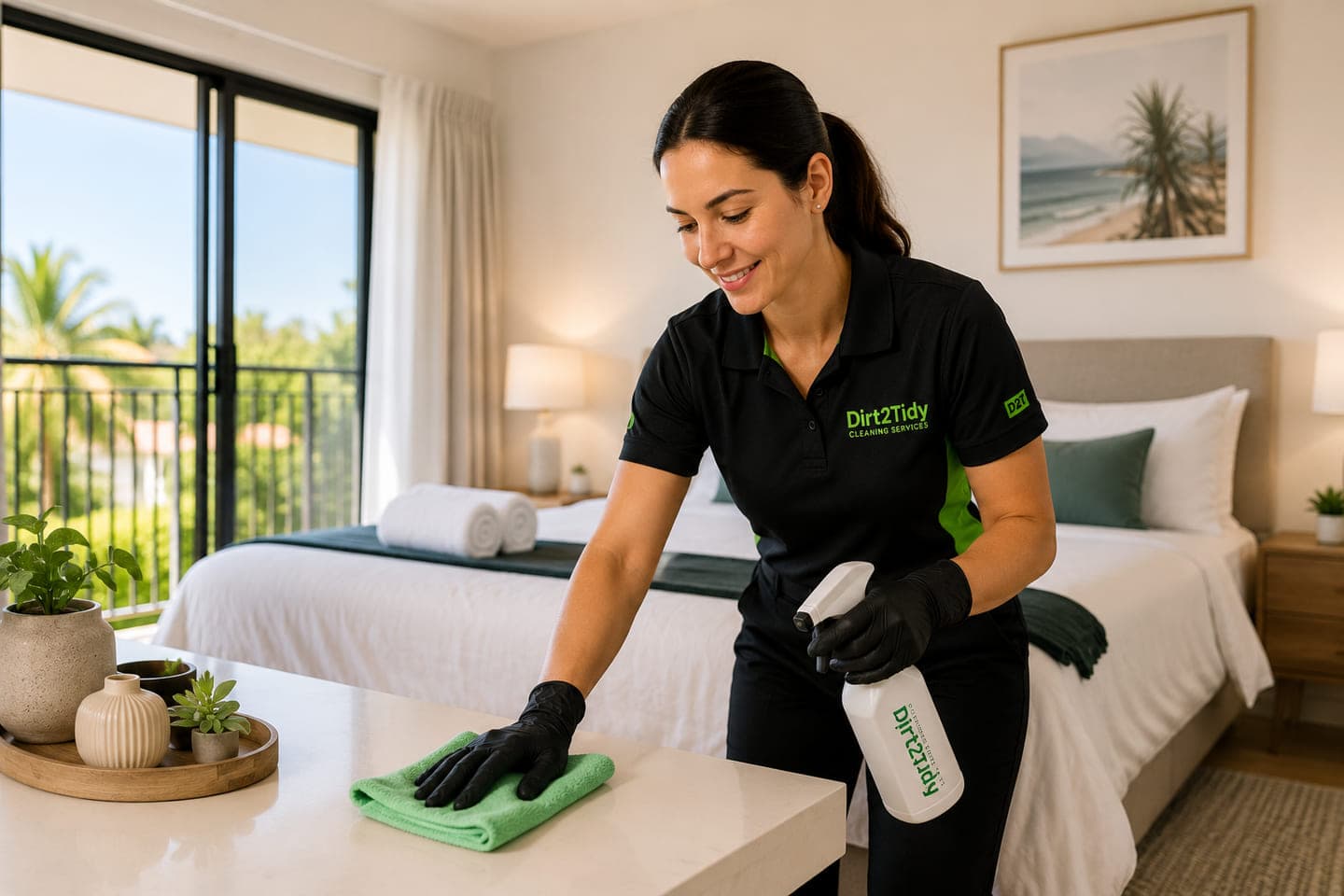

Identify the blind or shade
Check whether it is fabric, timber, faux timber, aluminium, plastic, coated or lined, and read the care label. Inspect cords, tracks, motors and brackets before cleaning. Do not remove a blind or shade from a high or fragile fitting without suitable access and permission.
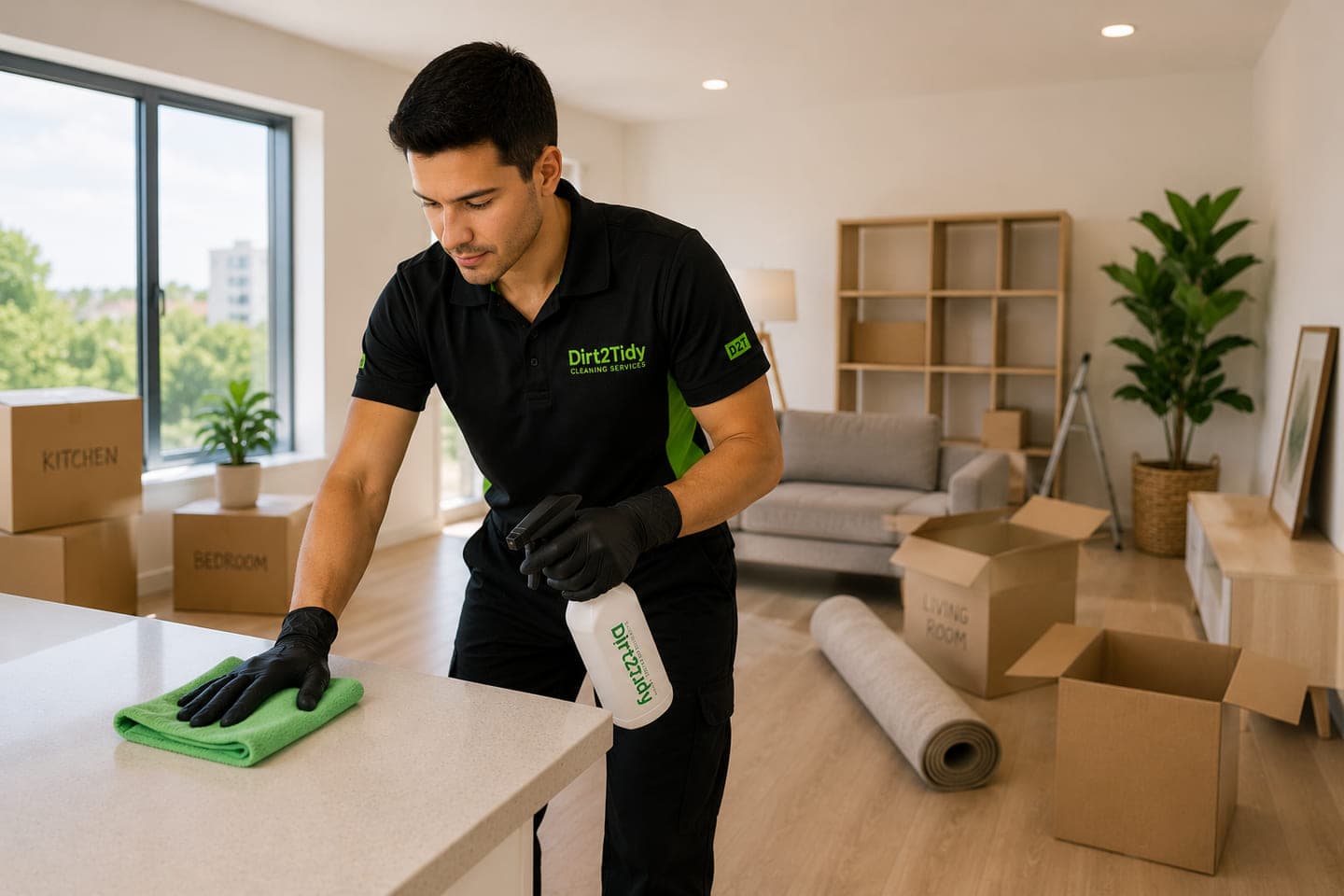
Remove dry dust first
Use a soft brush or suitable low-suction vacuum attachment, working across slats or down fabric as directed. Avoid forcing the mechanism, pulling cords or bending slats. Keep dust away from eyes, food and electronics and change tools between dirtier areas.
Use limited moisture
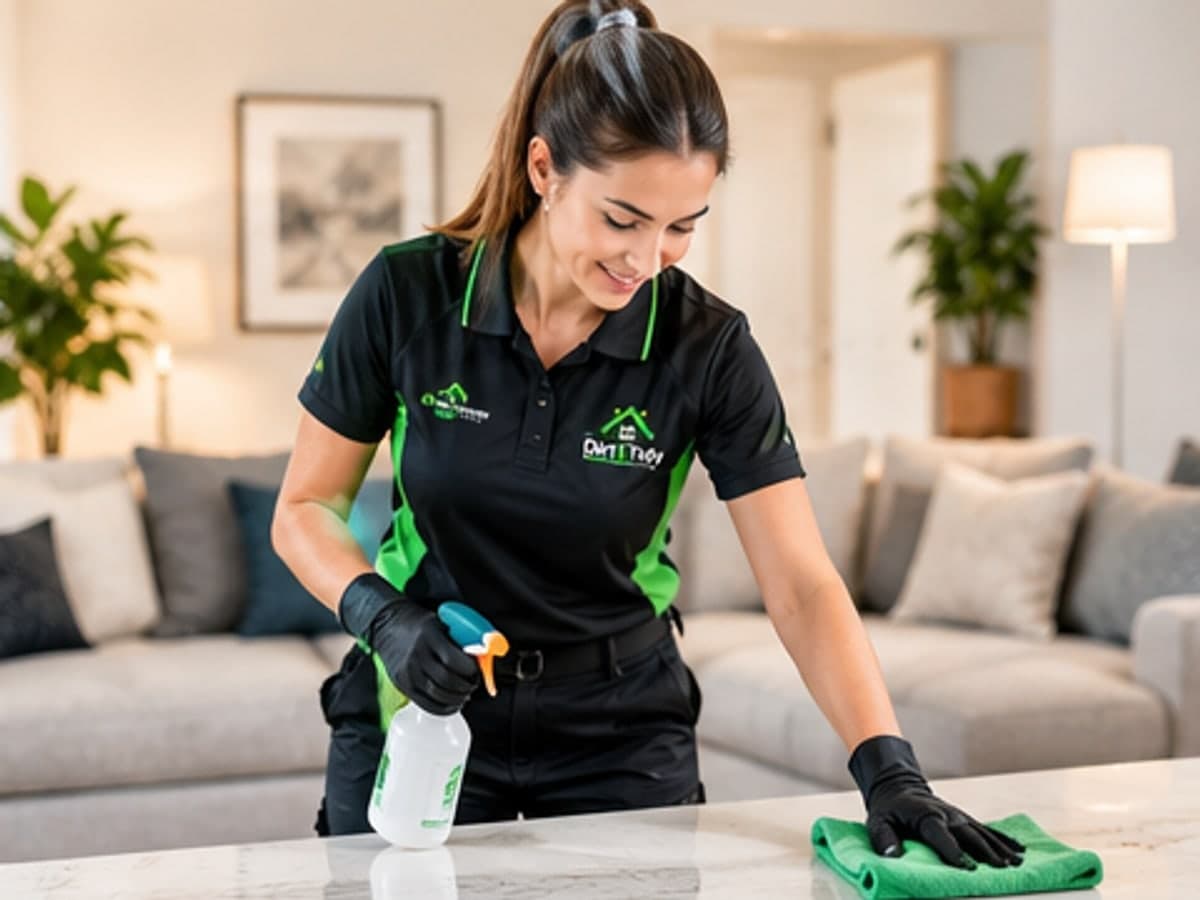
Only damp-clean when the material and care instructions permit it. Apply product to a cloth, not directly to the mechanism, and test a hidden area. Water can mark fabric, swell timber, corrode metal and damage linings. Do not use bleach, abrasive pads or solvent by guesswork.
Use safe access and specialist help
Do not lean from windows, stand on furniture or work at height without suitable equipment and training. High, external, delicate or motorised treatments may need a window or blind specialist. Dirt2Tidy can quote accessible interior cleaning within the confirmed scope.