Choose the least intensive suitable method
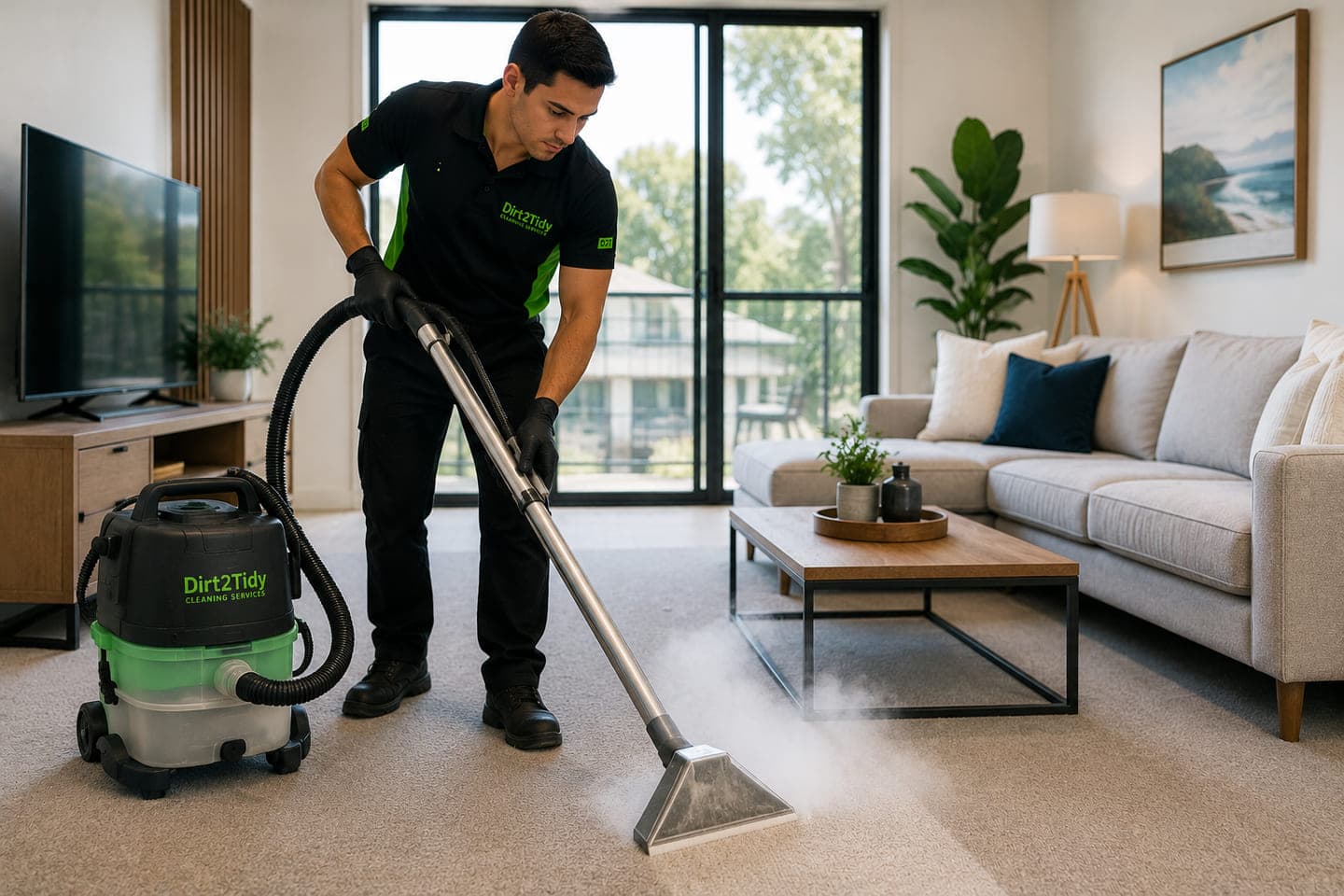
Vacuum loose soil first and identify the fibre, backing, dye, pile and manufacturer care instructions. A low-moisture method may suit one carpet, while controlled extraction may suit another. The method should be selected for safe soil removal and material protection, not simply labelled green.
Measure products and control water
Use a carpet-compatible, labelled product at the stated dosage and avoid adding chemistry because a result is not immediate. Recover moisture carefully, protect underlay and arrange safe airflow. Excess detergent can leave residue, while excess water can extend drying and create further material problems.
Reduce avoidable waste responsibly
Use reusable equipment and cloths where hygienically practical, maintain filters and follow local disposal instructions for used solution and packaging. Waste streams can depend on the product, soil and local requirements. Do not pour concentrated chemicals or contaminated liquid into a drain without checking the correct process.
Ask for evidence, not vague labels
Ask what product, equipment, water-use approach, recovery method and disposal arrangements apply to your carpet. Tell the cleaner about sensitive fibres, previous treatments and drying constraints. Dirt2Tidy can discuss a carpet-cleaning scope without claiming that any method is universally non-toxic or environmentally harmless.