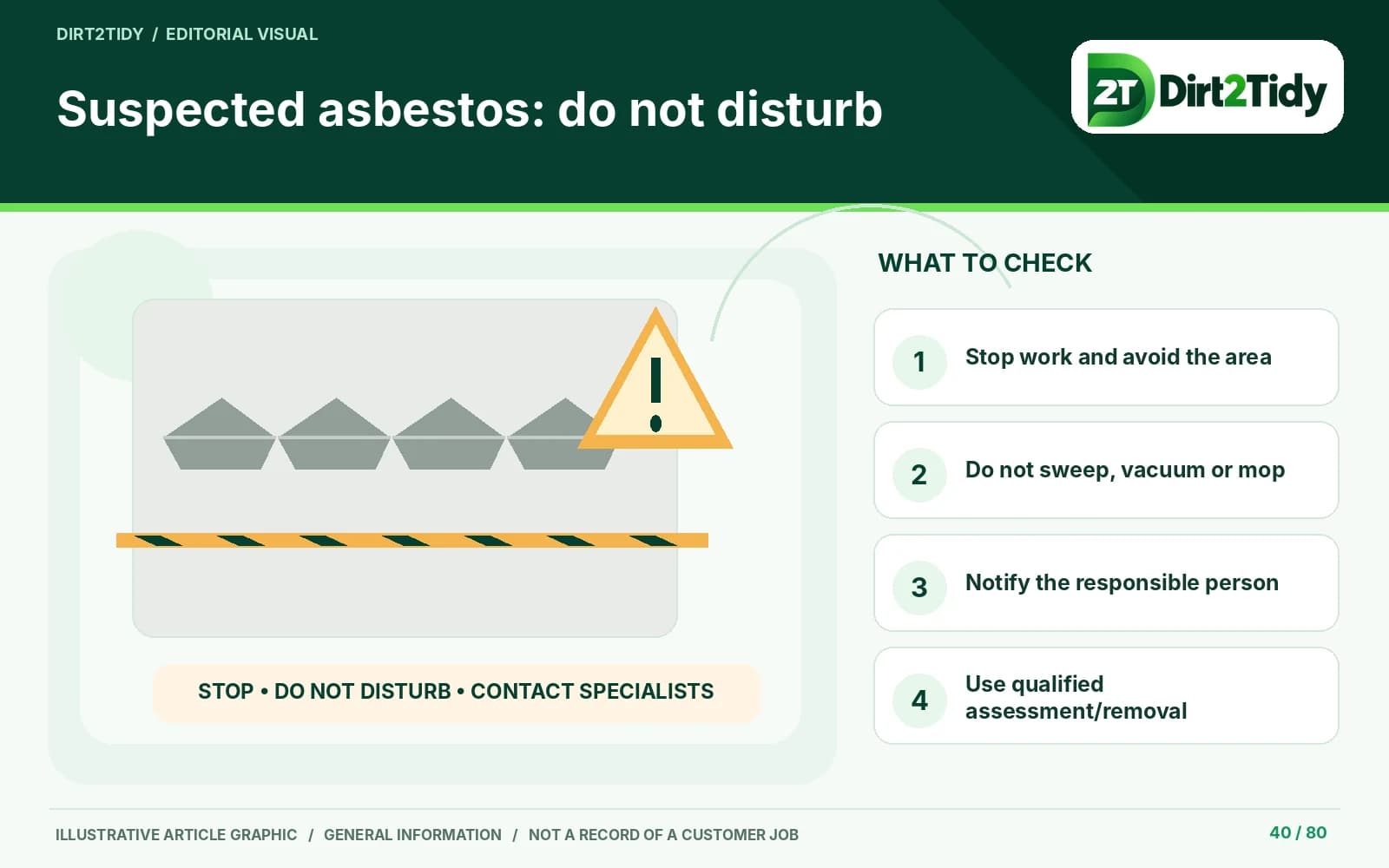
Stop and do not disturb the material
Do not sweep, vacuum, mop, wipe, drill, sand, scrape or move suspected asbestos debris. Do not handle contaminated tools, clothing or waste. Keep other people and pets away from the affected area if you can do so without entering or disturbing it. Do not use fans or other actions that may spread dust.
Contact the responsible property person and regulator
If you rent, tell the property manager or owner promptly and keep a written record. In NSW, SafeWork NSW advises people to contact the property manager about asbestos in a rented property and refers home concerns to the local council; see its asbestos guidance.
NSW Asbestos provides information on rental-property owners and tenants and how to find a licensed assessor. Other states and territories have their own asbestos regulators.
Use a qualified assessor or removalist
A qualified asbestos professional can advise whether assessment, sampling or licensed removal is needed and how the site should be made safe. Do not collect a sample or hire a general cleaner to remove suspect dust. Verify the professional’s current licence with the relevant regulator.
If material has already been disturbed
Leave the affected area undisturbed and seek urgent advice from the local asbestos authority or licensed professional about access, occupants, clothing and next steps. SafeWork NSW’s guidance directs people to minimise disturbance, restrict access where appropriate and contact a licensed professional. Do not follow generic internet decontamination steps.
Keep cleaning and asbestos remediation separate
An ordinary cleaning service cannot determine whether a material contains asbestos, assess exposure, conduct licensed removal, issue clearance or certify a home as safe. Routine cleaning should only be considered after the qualified professional and relevant authority confirm the area is released and specify what is appropriate.