
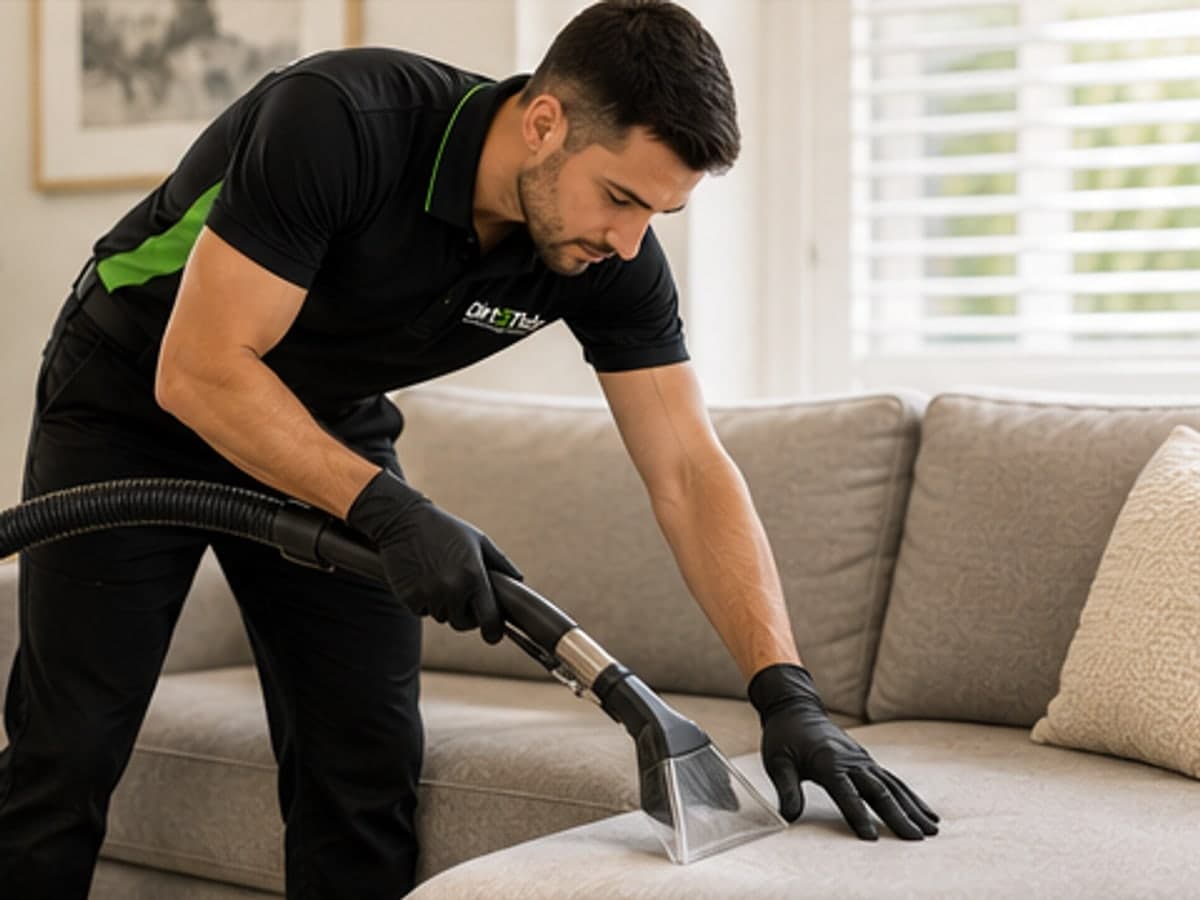
Check the care code and nap
Identify whether the fabric permits water-based, solvent-based, combined or vacuum-only care. Check removable covers, backing, trims and the frame too. Photograph or test a hidden area before treatment, and brush in the direction recommended for the nap rather than rubbing against it.
Remove loose dust gently
Use a suitable upholstery-vacuum attachment with low pressure and clean seams, cushions and edges. Avoid stiff brushes, scraping, direct heat and high suction that can flatten or pull the pile. Keep pets, food and damp items away while the fabric is being maintained.
Treat marks without flooding
Blot a fresh spill, use only a compatible labelled product and apply minimal moisture if the care code permits. Do not use vinegar, bleach, abrasive powders or an untested solvent. If colour transfers, the nap changes or a watermark forms, stop and obtain professional advice.
Use a specialist when needed
Embedded soil, persistent odour, dye transfer, fragile fabric, damaged foam or a missing care label may require an upholstery specialist. Dirt2Tidy can quote suitable upholstery cleaning after the material and condition are confirmed, but cleaning cannot repair worn or broken furniture.


