
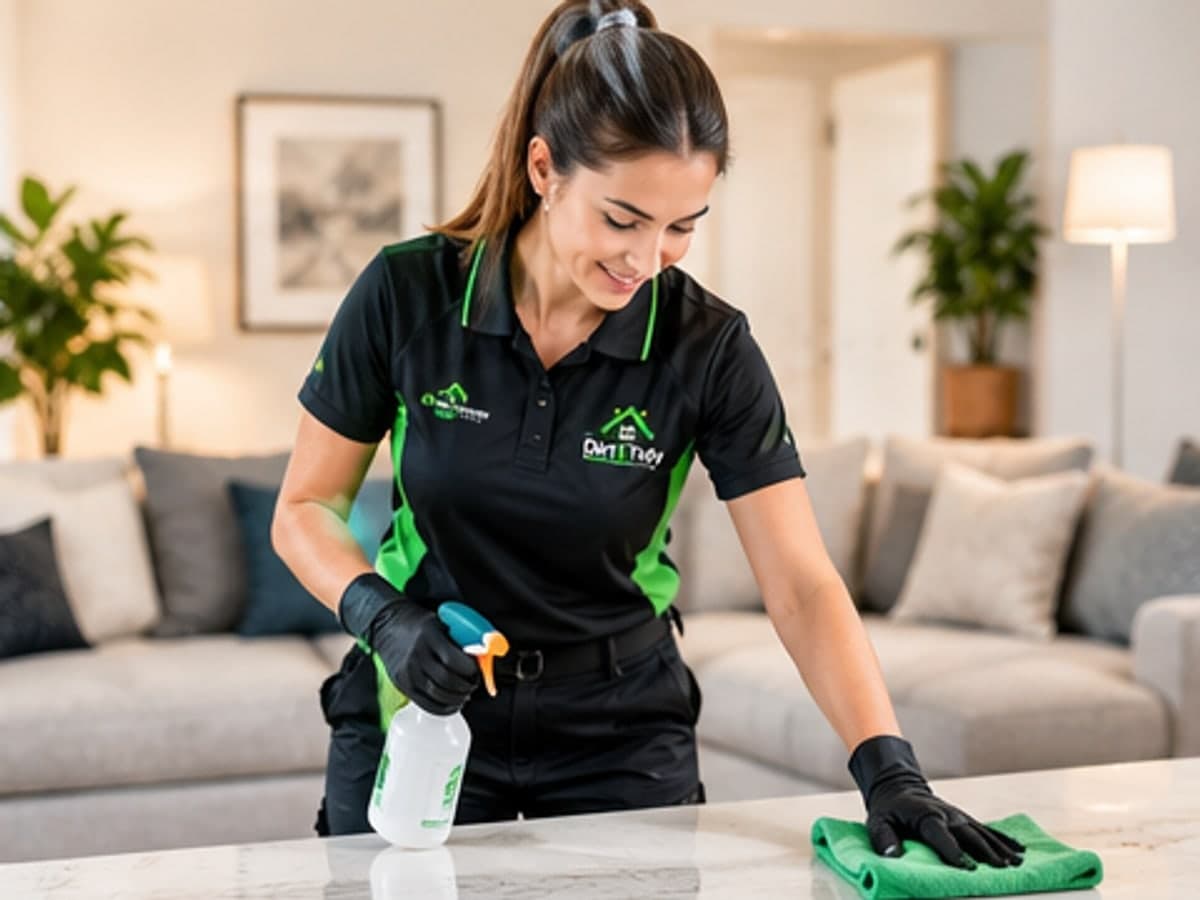
Adapt tasks to comfort and ability
Choose short tasks at a comfortable pace, use stable storage for everyday items and keep walkways clear. Avoid ladders, heavy lifting, awkward reaches and wet floors if they feel unsafe. Use chairs only when stable and intended for the task; do not use wheeled seating as a step.

Prioritise everyday areas
Focus on clear routes, dry floors, kitchen surfaces, bathroom touchpoints and frequently used items. Follow surface and product labels, keep chemicals stored safely and allow cleaned areas to dry before walking on them. Cleaning alone cannot remove every fall risk or address medical and mobility needs.
Arrange help with clear preferences
A resident can identify which tasks matter, what should not be moved, product sensitivities, pets and preferred visit times. Family, community supports or a cleaning provider may help with agreed tasks. Confirm the scope, access and payment arrangements directly with the person receiving the service.
Keep cleaning separate from care and repairs
Domestic cleaning does not replace personal care, nursing, mobility assessment, electrical repairs or mould remediation. Seek appropriate professional advice for those needs. If a task cannot be completed safely, leave it and arrange suitable help.


