Cleaning and Disinfection: Scope, Products and Honest Limits

Routine cleaning removes soil from surfaces; disinfection is a separate process using products and methods intended for that purpose. Health guidance and product directions can change, so the task should be defined clearly before requesting service. This guide explains the difference, the product requirements, and where specialist decontamination applies.

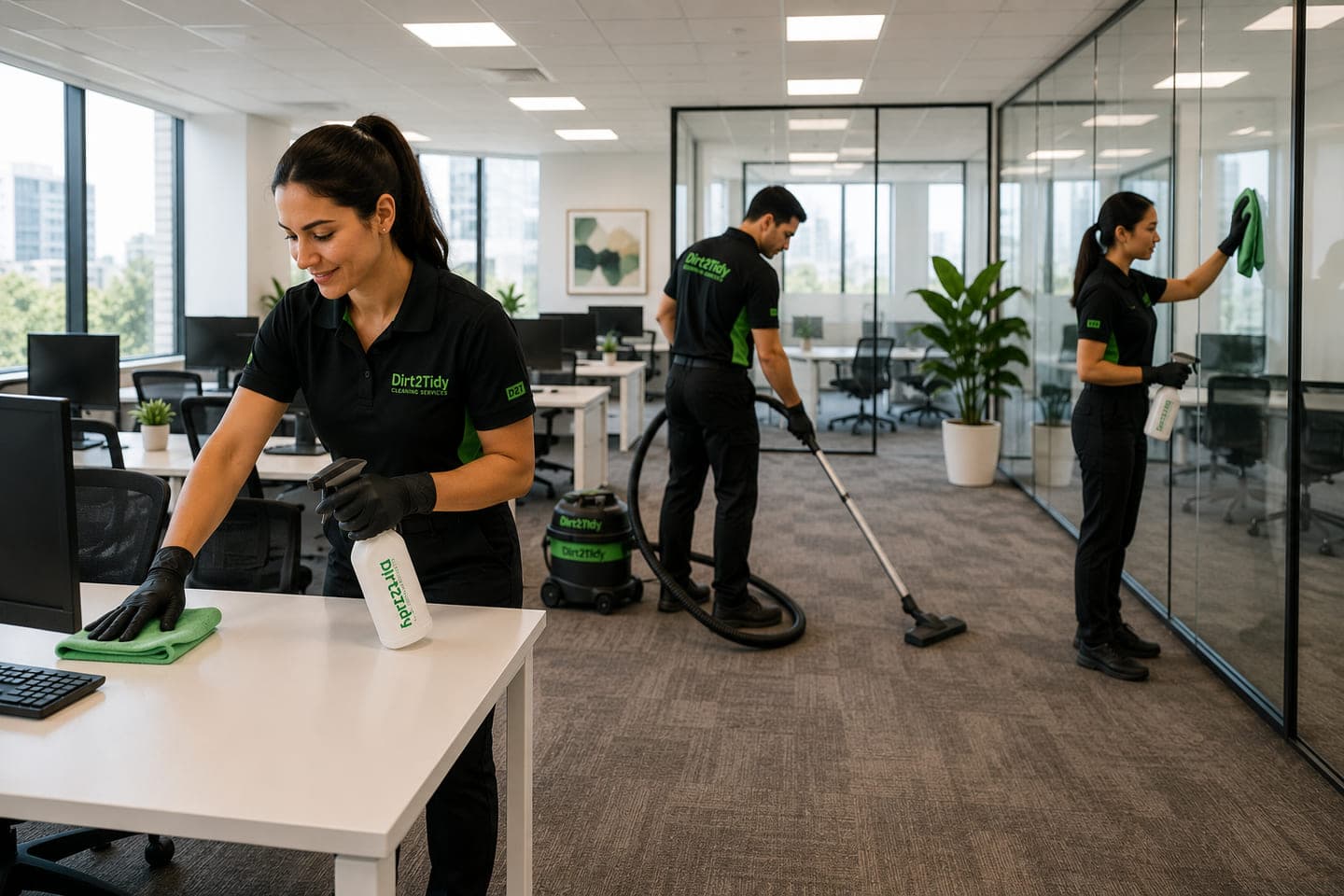
Commercial cleaning team working in a modern Australian office

Clarify the task before requesting service

Identify the premises, surfaces, access, occupancy and the reason disinfection is being considered. A general office clean is not automatically a disinfection service, and clinical, regulated decontamination, outbreak response and hazardous contamination require separate assessment and appropriate providers. Being specific about what you need is what makes the quote honest and the scope achievable.
Workplace surfaces assessed for cleaning-service scope

Follow current product and workplace directions

Check the product label for approved use, dilution, contact time, ventilation, protective equipment and rinsing. Follow current workplace, industry and public-health guidance, and don't rely on older advice. Disinfection only works when the product's stated conditions are met — the right surface, the right dwell time, sometimes rinsing — and a quick wipe doesn't disinfect.

Set realistic boundaries

Routine cleaning removes soil and grime; disinfection targets specific organisms. A cleaning service can do either or both, but they're different scopes with different products and different requirements, and describing a routine clean as 'disinfection' overstates what it does.

A business that needs genuine disinfection should specify it, and a provider who can't explain the difference isn't the right one.

Prepare a workplace quote

Describe the premises, surfaces, access, occupancy, the reason for the request and any specialist requirements. A quote built on the actual task and conditions is the only meaningful number. Clinical, regulated or hazardous decontamination needs a specialist provider, not a general cleaner, and the scope should reflect that from the start.

Keep cleaning moving

Related Cleaning Services

More from Dirt2Tidy

Related Cleaning Guides

FAQ

FAQs

Everything about bookings, coverage and what to expect.

No — and confusing the two is a frequent and risky mistake. Routine cleaning clears soil and grime; disinfection uses a product intended to inactivate specified microorganisms, with specific contact times and surfaces. A clean surface is the prerequisite for effective disinfection.

If you need disinfection, specify it, and ensure the scope and products match.

No — and any claim that it does is overreaching. A clean, well-maintained workplace is nicer to work in, but infection prevention depends on many factors beyond cleaning: ventilation, hygiene practices, illness management and the behaviour of people in the space.

Cleaning is one part of a broader approach, not a guarantee of outcomes it can't control.

From the relevant public-health authority and industry regulator for your jurisdiction and sector, not from a cleaning provider's marketing. Health guidance and product directions change, and what was current a year ago may not be now.

A cleaning provider can describe and deliver a scope; health advice belongs to the authorities and qualified professionals.