Identify the plate material first
Check the appliance manual or product label to determine whether the plate is stainless steel, cast iron, enamelled or non-stick. If the finish is unknown, avoid assuming that metal tools, scouring pads or abrasive cleaners are suitable.
Clean only as the manufacturer directs
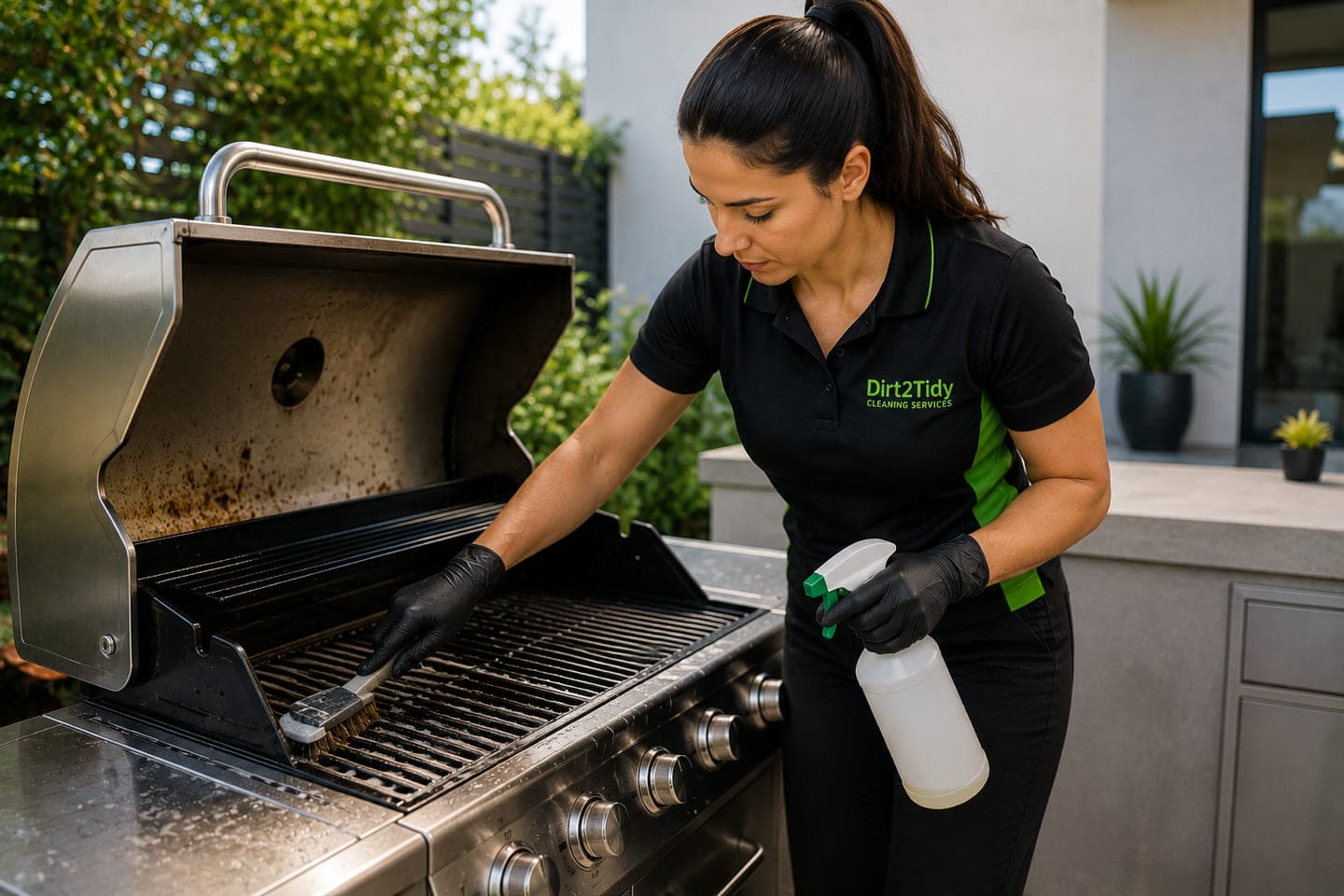
Once cool, remove loose food with a tool permitted for the surface and use a compatible cleaner and cloth or pad. Do not pour water over a hot plate or spray controls, burners, electrical components or gas connections. Some appliances specify a warm-cleaning method; follow only the instructions for that exact model.

Avoid scratches and appliance damage
Metal scrapers and steel wool can damage some coatings and finishes. Do not hose down electric components or mix cleaning products. If residue remains, consult the appliance maker rather than increasing pressure or using an unapproved chemical.
When to request a BBQ clean
For a quote, list BBQ type, plate material if known, residue, access and requested components. A professional clean is still limited by corrosion, damaged coatings and permanent marks; it does not repair or certify an appliance.