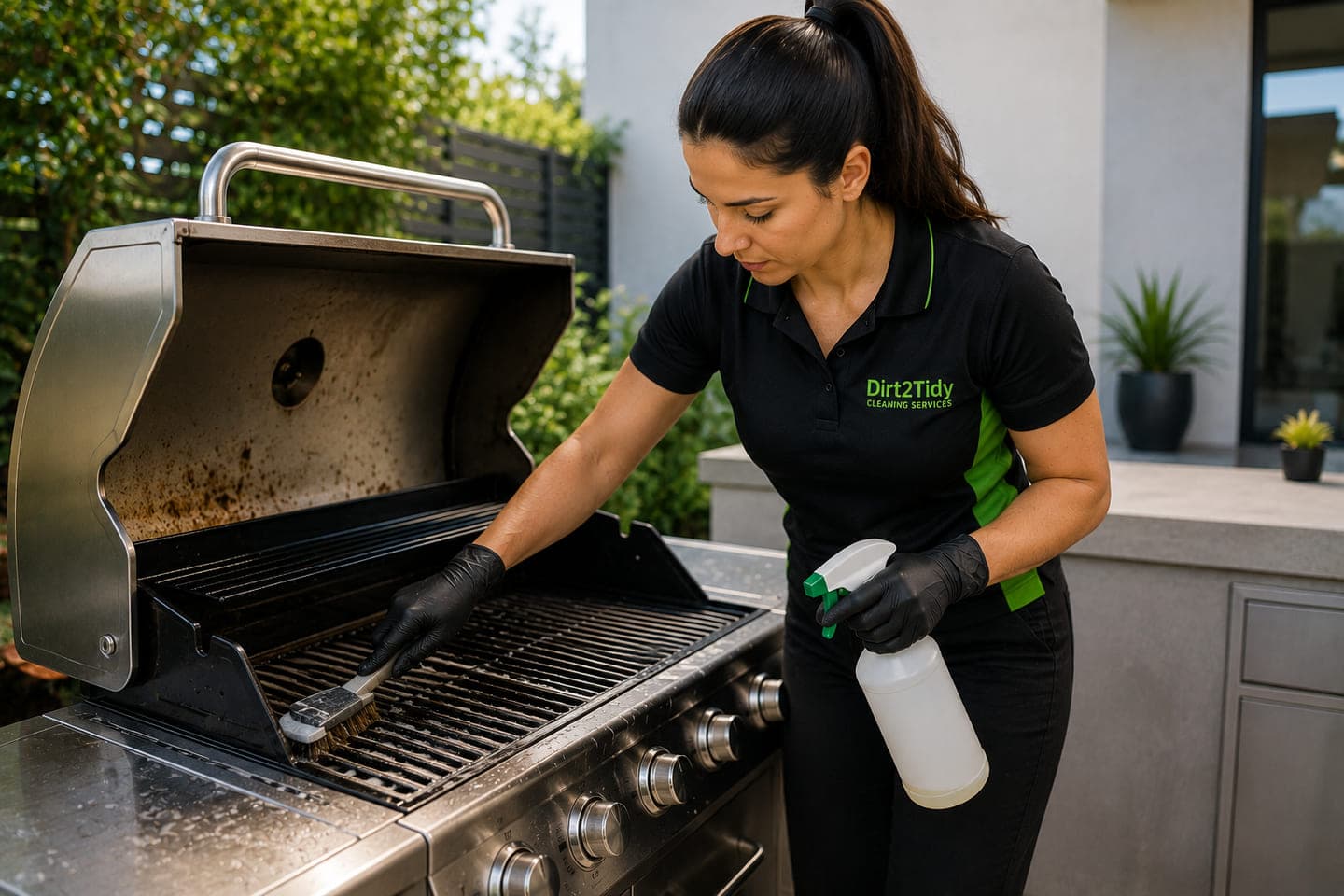
Identify the stain and surface
Check whether the mark is mineral residue, rust, soil, paint or damage, and identify glass, chrome, ceramic, stone, timber, paint or pavers. Test a small hidden area and read the surface manufacturer’s guidance. Do not assume an acidic descaler is safe for stone, metal plating, grout or painted finishes.
Use a controlled cleaning method
Remove loose soil, use a compatible labelled product and keep contact time within the instructions. Rinse or wipe residue away as directed and dry the surface. Never mix acids, bleach, ammonia or other chemicals, and keep products away from people, pets, food and water systems.
Avoid etching and permanent damage
A stain that does not respond may be etching, corrosion, failed coating or embedded mineral damage rather than removable dirt. Further scrubbing can worsen it. Record previous treatments and stop if the surface becomes cloudy, dull, discoloured or rough.
Escalate difficult surfaces
Large areas, valuable stone, damaged fixtures, persistent deposits or uncertain water chemistry may need a stone, metal, plumbing or water-treatment specialist. Dirt2Tidy can discuss ordinary domestic cleaning where the surface and method are suitable.